
The shift to enterprise-grade stablecoin infrastructure
Stablecoin payments have moved past the experimental phase and are now embedded in the core payment rails of major e-commerce platforms. What began as a niche option for crypto-native businesses is becoming standard infrastructure for global merchants seeking to reduce friction and settlement costs. This transition is driven by the stability of pegged assets like USDC and USDT, which offer the speed of blockchain without the volatility of traditional cryptocurrencies.
The market is consolidating around a few key providers who bridge the gap between legacy payment processing and on-chain settlement. For instance, Checkout.com has enabled stablecoin acceptance for eligible enterprise merchants, allowing them to capture global demand while settling in stablecoins through partnerships with firms like Fireblocks. This approach allows merchants to maintain their existing operational workflows while offering consumers a modern, efficient payment method.
This infrastructure shift is critical for merchants operating across borders. Traditional cross-border payments often involve high fees and delayed settlement times due to intermediary banks. Stablecoins offer near-instant settlement and lower transaction costs, making them an attractive alternative for international e-commerce. As more payment processors integrate these capabilities, the barrier to entry for merchants decreases, accelerating adoption across diverse verticals.
The stability of the underlying asset is paramount. Merchants prefer USDC and USDT because their value is pegged to the US dollar, minimizing the risk of sudden value fluctuations during the transaction process. This stability ensures that the price agreed upon at checkout remains the value received by the merchant, eliminating the need for complex hedging strategies that are often required with volatile cryptocurrencies.
As the technology matures, the focus is shifting from mere acceptance to seamless integration. Merchants are no longer just adding a "pay with crypto" button; they are integrating stablecoin payments into their broader financial strategy, leveraging the transparency and speed of blockchain for reconciliation and reporting. This enterprise-grade approach is what distinguishes the current wave of adoption from earlier, more speculative experiments.
Checkout.com and Fireblocks integration
Checkout.com has moved beyond simple token acceptance by partnering with Fireblocks to enable USDC settlement for enterprise merchants. This integration allows eligible US merchants to settle card takings directly into stablecoin wallets, operating around the clock rather than relying on traditional banking hours. The move targets high-volume merchants seeking to capture global demand with immediate liquidity.
The partnership leverages Fireblocks’ institutional-grade infrastructure to manage the custody and settlement layers. For the merchant, this means the complexity of blockchain transactions is abstracted away. The system processes the consumer’s stablecoin payment and settles the net amount in USDC, providing a bridge between traditional card networks and on-chain value.
By settling in USDC, merchants gain exposure to the stability of a dollar-pegged asset while avoiding the volatility of other cryptocurrencies. This setup is particularly relevant for businesses with international customer bases who want to reduce cross-border friction without converting immediately back to fiat. The integration represents a significant step toward making stablecoins a standard settlement layer for major payment processors.
Crossmint and Eco developer tools
For merchants ready to move beyond hosted checkout pages, headless SDKs offer the flexibility to embed stablecoin payments directly into custom interfaces. Crossmint and Eco provide the infrastructure to handle the complex on-chain settlement while keeping the user experience smooth and familiar.
Crossmint focuses on abstraction. Its Digital Asset Checkout API allows users to pay with credit cards without holding a crypto wallet, while still supporting direct token payments for those who prefer self-custody. The platform offers hosted, embedded, and headless integration options, making it suitable for merchants who want a balance of control and convenience. Crossmint handles the custody and compliance layers, reducing the regulatory burden on the merchant. Crossmint Digital Asset Checkout
Eco takes a different approach by focusing on liquidity aggregation. Its Routes and Accounts products allow developers to access stablecoin liquidity across multiple chains in a single integration. This is particularly useful for merchants targeting a global audience where users may hold different stablecoins or reside on various networks. Eco simplifies the routing logic, ensuring payments are settled efficiently regardless of the underlying blockchain. Eco Blog: One Click. Full Send.
Both platforms aim to remove the friction of traditional crypto onboarding. Crossmint leans into fiat on-ramps and custodial solutions, while Eco emphasizes multi-chain liquidity and developer flexibility. The choice often depends on whether the merchant prioritizes ease of fiat integration or granular control over chain selection.
Integration Comparison
| Feature | Crossmint | Eco |
|---|---|---|
| Integration Type | Hosted, Embedded, Headless | Headless SDKs, Routes |
| Primary Focus | Fiat-to-Crypto Abstraction | Multi-Chain Liquidity |
| Supported Tokens | Major Stablecoins (USDC, USDT) | Multi-Chain Stablecoins |
| Target Audience | Merchants wanting fiat ease | Developers needing flexibility |
The table below highlights the technical distinctions that matter during integration planning. Crossmint’s approach is often faster for merchants who want to accept crypto payments without managing wallet infrastructure. Eco is better suited for developers who need to build custom liquidity routing into their own applications.
Visa’s stablecoin infrastructure
Visa is building the plumbing that lets traditional financial institutions accept digital dollars without managing blockchain nodes. The company’s infrastructure connects legacy banking rails to on-chain settlement, allowing banks and fintechs to process stablecoin payments with the same reliability as card transactions. This bridges the gap between Web2 compliance and Web3 speed.
The network supports programmable stablecoins, which enable instant, borderless settlement. Instead of waiting days for ACH clearing, merchants see funds available immediately. Visa’s role is to handle the complexity of token bridging, compliance checks, and fraud detection, presenting a unified API to its partners. This allows institutions to offer crypto-like speed without the operational headache of direct chain interaction.
By integrating these rails, Visa effectively turns stablecoins into a direct competitor to traditional card networks. Merchants gain access to 24/7 liquidity and lower cross-border fees, while banks retain regulatory oversight. This infrastructure is not just an experimental feature; it is a core part of Visa’s strategy to remain relevant in a digital-first economy.
Implementation checklist for merchants
Adopting one-click stablecoin checkout requires coordinating three layers: the payment gateway, the settlement rail, and your internal compliance. Providers like Checkout.com now offer direct USDC settlement via Fireblocks, removing the need to manage private keys or complex wallet infrastructure yourself [src-serp-1]. This reduces technical overhead but introduces new regulatory dependencies.
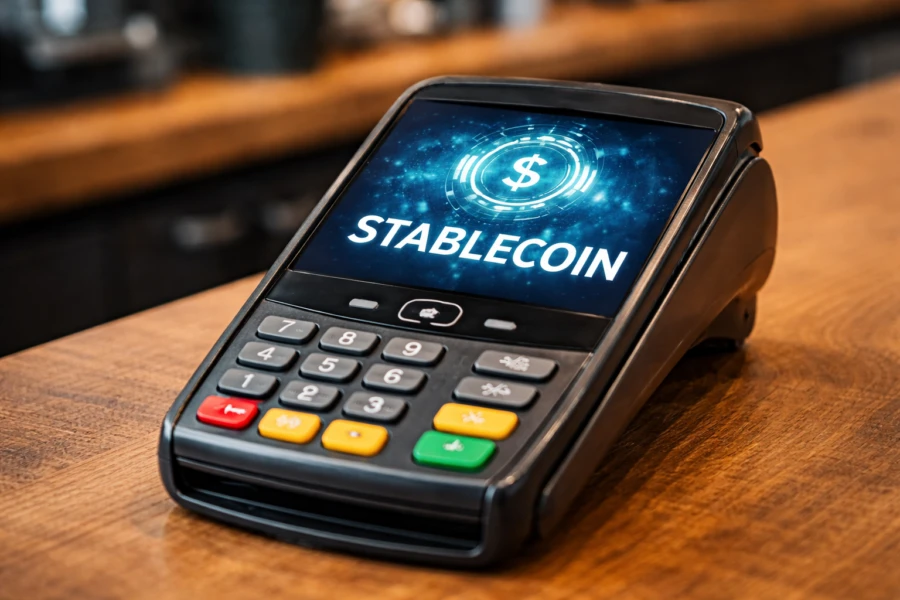
Verify that your payment processor supports the specific stablecoin you intend to accept (typically USDC or USDT). Ensure the provider handles the conversion from fiat to stablecoin or vice versa, depending on your settlement preference. Gateways without native stablecoin rails force you to build custom middleware, increasing failure rates.
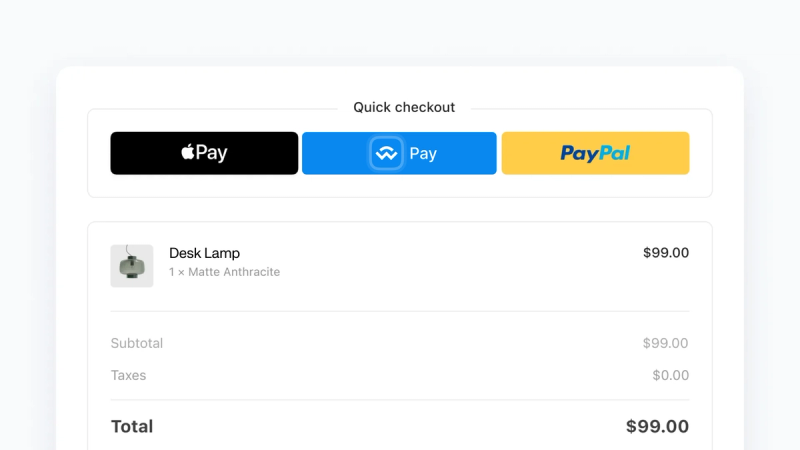
Stablecoin transactions are subject to the same Anti-Money Laundering (AML) regulations as fiat. Integrate your existing KYC provider with the gateway’s risk engine. Test edge cases where transaction velocity triggers manual reviews. Failure to map these workflows accurately will result in frozen funds or rejected settlements during peak traffic.
Run sandbox transactions that mimic real-world friction: failed payments, partial refunds, and chargebacks (if applicable). Confirm that the settlement time matches your accounting periods. If using a provider like Checkout.com, verify that the USDC lands in your designated wallet within the expected window [src-serp-3].
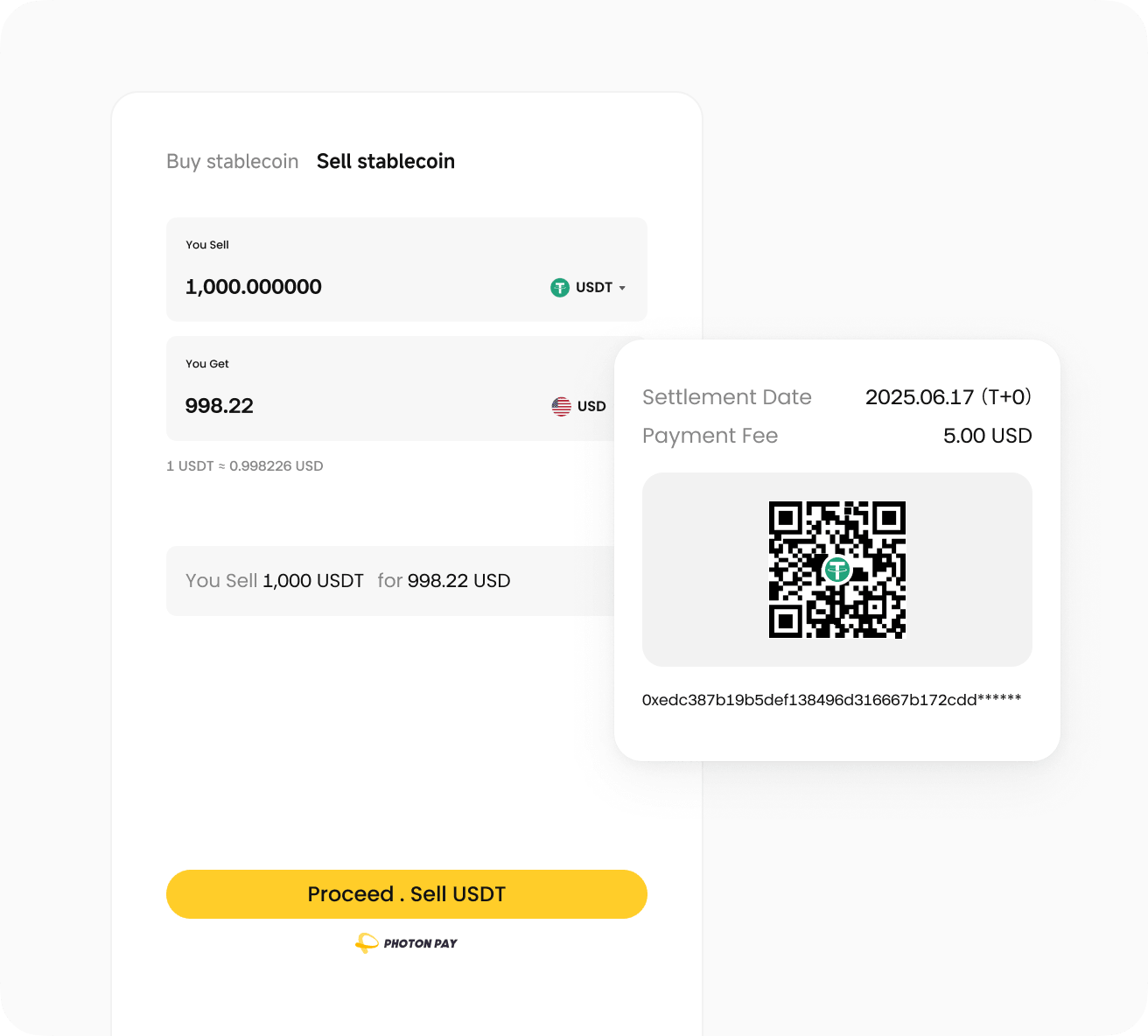
Stablecoin transactions occur on public blockchains. You must monitor gas fees and network congestion to avoid delayed settlements. Integrate a block explorer API or rely on your gateway’s dashboard to track transaction confirmations. Sudden spikes in network fees can erode margins if not passed through to the consumer or absorbed strategically.
| Feature | Gateway Capability | Merchant Risk |
|---|---|---|
| Native Settlement | USDC directly to wallet | Low (no fiat conversion delay) |
| Custom Middleware | API to external exchange | High (integration complexity) |
| Card-to-Crypto | Hosted checkout via Crossmint | Medium (higher processing fees) |
Implementing one-click stablecoin checkout is not just a technical integration; it is a financial infrastructure decision. Choose a partner that aligns with your risk appetite and settlement speed requirements. Start with a limited currency pair to validate the flow before scaling globally.
Stablecoin transaction examples
Understanding stablecoin payments requires looking at specific use cases across different platforms. For merchants, the primary example involves integrating with payment processors like Checkout.com, which enables enterprise clients to accept stablecoins directly from consumers. This infrastructure allows businesses to capture global demand without managing private keys or blockchain settlement risks themselves [src-serp-1].
For individual users and smaller exchanges, transactions typically follow a deposit or withdrawal pattern. A common example is sending USDC from a personal wallet to a centralized exchange account, such as Coinbase, to fund trading positions. Conversely, moving USDT from an exchange like Binance back to a personal hardware wallet represents a standard withdrawal transaction.
No comments yet. Be the first to share your thoughts!