
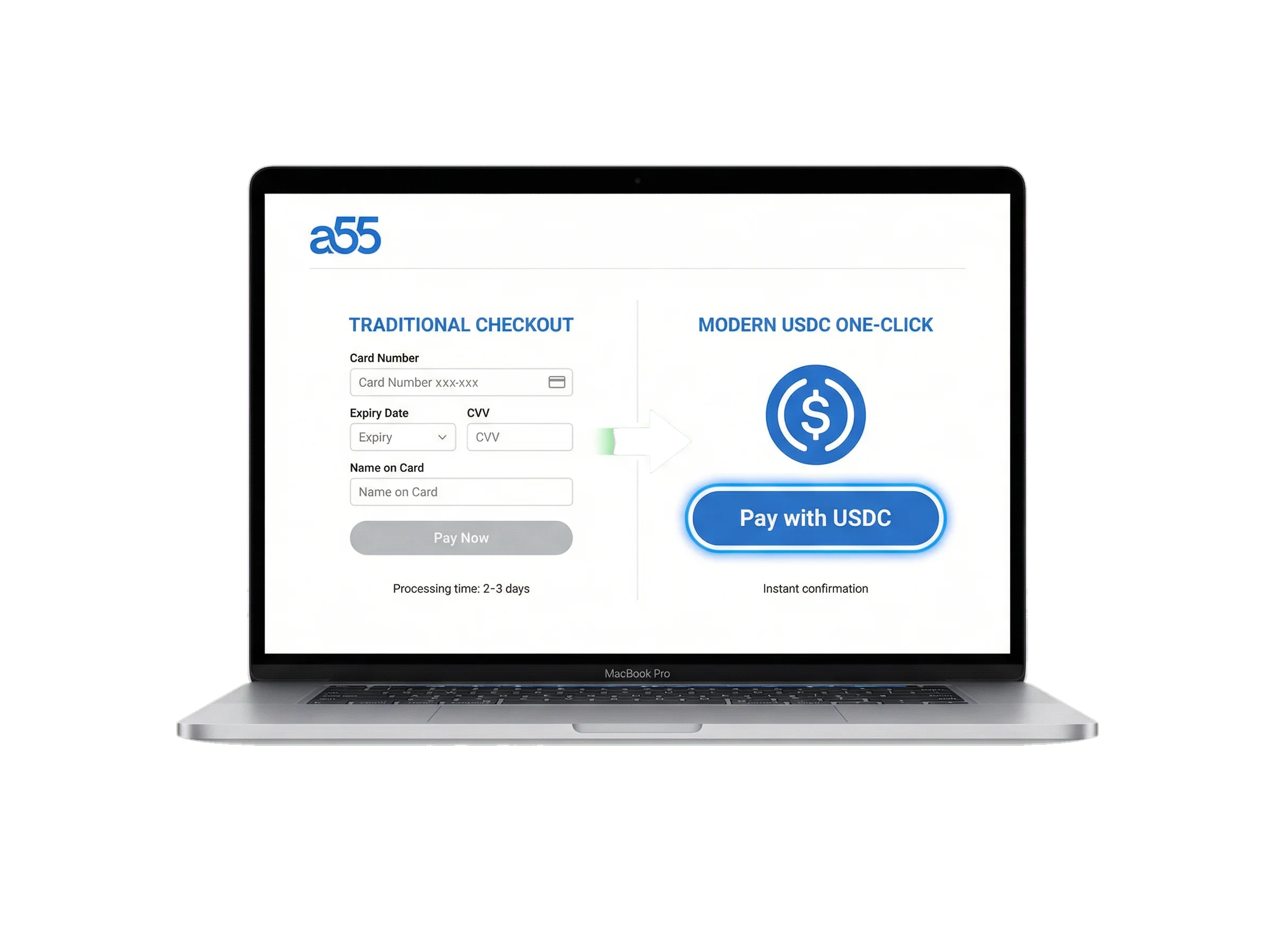
Market shift to instant stablecoin settlement
The architecture of online payments is moving toward a layer that prioritizes finality over friction. Traditional card networks, while ubiquitous, introduce a lag between transaction initiation and fund availability, alongside processing fees that erode merchant margins. One-click stablecoin checkout addresses this by leveraging blockchain rails to settle transactions in seconds, effectively collapsing the settlement cycle from days to moments.
This shift is not merely about speed; it is about the reliability of the value being transferred. Stablecoins provide a digital asset that maintains a predictable peg, typically to the US dollar, allowing merchants to accept crypto payments without the volatility inherent in Bitcoin or Ethereum. As noted in recent industry analyses, this stability is the prerequisite for replacing fiat as the primary medium of exchange in digital commerce [src-4].
The infrastructure enabling this shift is becoming increasingly sophisticated. Providers like Volt are now unifying fiat and regulated stablecoins on single, secure checkout interfaces, allowing merchants to manage treasury operations alongside payment acceptance [src-1]. This consolidation reduces the technical debt previously associated with integrating multiple payment processors.
To understand the baseline of this value transfer, it is essential to look at the stability of the underlying asset. The following chart illustrates the price stability of USDC against the US dollar, demonstrating why it serves as a reliable settlement layer for e-commerce.
The data confirms that stablecoins maintain their peg with minimal deviation, providing the predictable accounting environment that retailers require. This stability, combined with near-instant settlement, positions one-click stablecoin checkout as a critical infrastructure layer for the next generation of digital commerce.
Leading SDKs for one-click stablecoin checkout
The infrastructure for one-click stablecoin checkout is fragmenting into specialized providers. Each SDK offers a distinct path for merchants to accept digital payments, balancing settlement speed, supported blockchains, and fiat off-ramp capabilities. Choosing the right stack depends on whether the priority is instant consumer settlement, multi-chain liquidity, or deep integration with existing payment gateways.
Volt
Volt positions itself as a unified checkout layer that bridges fiat and regulated stablecoins. Their SDK focuses on simplifying the merchant experience by handling the complexity of crypto settlement behind a familiar payment interface. Merchants can accept stablecoins while receiving funds in fiat, effectively removing crypto volatility risk from the balance sheet. This approach is particularly suited for traditional merchants who want to offer crypto payments without managing treasury operations directly.
Checkout.com
Checkout.com leverages its existing enterprise payment infrastructure to integrate stablecoin acceptance, primarily through partnerships with custodians like Coinbase. This SDK is designed for large-scale enterprises that already process high volumes of fiat transactions. By embedding stablecoin capabilities into their existing terminal and API stack, Checkout.com allows merchants to accept USDC and other stablecoins without building a separate crypto payment rail. The value proposition lies in consolidation: one contract, one reporting dashboard for both fiat and crypto revenue.
Polygon Payments
Polygon Payments offers a developer-first SDK optimized for speed and low fees. Their infrastructure supports 1-click cross-chain transactions, allowing merchants to accept over 30 fiat-pegged currencies including USDC and USDT. The SDK is built for high-throughput environments where transaction costs and finality time are critical. It provides direct on-chain settlement, appealing to merchants who want transparent, immediate confirmation of payments without intermediary settlement delays.
Owlting
Owlting takes a lighter-touch approach, focusing on ease of integration for smaller merchants and service providers. Their SDK enables stablecoin acceptance with minimal development effort, often starting with simple payment links before moving to full checkout integration. The platform handles the conversion from stablecoin to USD, allowing businesses to receive fiat settlement instantly. This model is ideal for freelancers, small businesses, or platforms that need to add crypto payment options quickly without significant engineering overhead.
| SDK | Settlement | Chains | Fiat Off-Ramp |
|---|---|---|---|
| Volt | T+0 (Fiat) | Multi-chain | Automated |
| Checkout.com | T+0 (Fiat) | Multi-chain | Partner-led |
| Polygon Payments | Instant (On-chain) | Polygon + Cross-chain | Direct |
| Owlting | Instant (USD) | Multi-chain | Automated |
The Reality of One-Click Integration
The "one-click" promise in stablecoin checkout is often a marketing simplification of a multi-step technical integration. Unlike traditional credit card processors that abstract away the underlying ledger, stablecoin SDKs require developers to understand the specific mechanics of blockchain transactions. The actual implementation complexity depends heavily on whether the solution is custodial or non-custodial, a distinction that fundamentally alters the developer experience.
In custodial flows, the SDK acts as an intermediary, handling private keys and transaction signing on behalf of the user. This approach mimics the familiarity of Apple Pay or Google Pay, reducing friction for the end consumer but introducing centralization risks. The developer’s primary task here is integrating the SDK’s UI components and managing the merchant’s relationship with the custodian. This is generally easier to implement but requires trusting a third party with user funds.
Non-custodial integrations demand a deeper understanding of Web3 protocols. Developers must implement wallet connection logic, handle network switching, and manage gas fees. While this offers a more authentic blockchain experience, it introduces significant friction: users must ensure they have the correct native token for gas on the specific chain. This complexity is why many early stablecoin checkout solutions struggled to achieve mass adoption despite the underlying technology being mature.
The technical reality is that "one-click" is only possible if the SDK abstracts away these wallet interactions. For developers, this means choosing between ease of use (custodial) and full control (non-custodial). There is no truly seamless one-click experience without some form of abstraction, and the choice of SDK will dictate how much of that abstraction you can offer your users.
Compliance and treasury realities
Accepting stablecoins is not merely a technical integration; it is a regulatory undertaking. Merchants must meet the same KYC and AML frameworks that govern traditional fiat transactions, but with added complexity due to the pseudonymous nature of blockchain addresses. SDKs that promise "one-click" simplicity often abstract these requirements, but the legal liability for compliance remains with the merchant. You cannot outsource regulatory adherence to a payment processor without understanding the underlying data flow.
Treasury management introduces immediate operational risks. Unlike bank accounts, stablecoin wallets offer no chargeback protection or automatic fraud reversal. If a customer sends funds from a wallet flagged for illicit activity, those assets may become frozen or tainted. SDKs like Checkout.com’s partnership with Fireblocks address this by providing institutional-grade custody and transaction monitoring, allowing merchants to settle directly into compliant wallets. This infrastructure is essential for maintaining liquidity without exposing the business to regulatory scrutiny.
Tax reporting also requires precise tracking. Each stablecoin transaction is a taxable event in many jurisdictions, requiring detailed records of the timestamp, amount, and fair market value at the time of exchange. Manual tracking is error-prone and unsustainable for high-volume merchants. Modern SDKs should integrate with accounting software to automate this data capture, ensuring that your treasury reports align with tax authorities. Failure to do so can result in significant penalties.
The choice of SDK determines your exposure to these risks. Providers that offer only raw API access to wallets leave you vulnerable to compliance gaps. Those that embed compliance checks into the checkout flow—such as Visa’s Stablecoin Platform—offer a more robust framework for managing inventory and reporting. Evaluate each SDK not just on speed, but on its ability to handle the backend complexities of regulated digital asset payments.
SDK selection criteria
Choosing the right SDK requires evaluating technical fit against regulatory and operational constraints. Custodial solutions like Volt and Owlting reduce development time and user friction but introduce counterparty risk and reliance on third-party liquidity. Non-custodial or hybrid approaches like Polygon Payments offer greater transparency and lower fees but demand higher engineering effort to manage wallet connections and gas optimization.
Enterprise-grade providers like Checkout.com bridge the gap by offering familiar fiat settlement rails while supporting underlying stablecoin infrastructure. This is critical for merchants who need to maintain existing accounting workflows and banking relationships while expanding payment options. The decision ultimately rests on whether the merchant prioritizes speed of integration and user experience (custodial) or cost efficiency and control (non-custodial/hybrid).
No comments yet. Be the first to share your thoughts!