
Why merchants adopt one-click stablecoin checkout
Traditional fiat payment rails are increasingly misaligned with the speed of modern commerce. When a customer clicks "buy," the transaction does not end there. Instead, funds often sit in limbo for days as banks and card networks reconcile ledgers. This delay ties up working capital and introduces friction that can cause cart abandonment. Stablecoin checkout removes this bottleneck by offering near real-time settlement, allowing merchants to access funds almost instantly after the sale.
The financial impact extends beyond speed. Traditional cross-border payments involve multiple intermediaries, each taking a cut of the transaction value. These fees can erode margins significantly, particularly for small-ticket international sales. Stablecoins operate on public blockchains, bypassing the correspondent banking network. As noted by Polygon, merchants can "cut fees to pennies" while receiving payments in roughly five seconds, regardless of the customer's location. This efficiency transforms cross-border commerce from a logistical headache into a straightforward digital transfer.
Security and programmability further strengthen the business case. Unlike card payments, which are vulnerable to chargeback fraud, stablecoin transactions are immutable once confirmed. Additionally, because these payments are programmable via smart contracts, they can be automated for subscriptions, recurring revenue, and complex escrow arrangements without manual intervention. For merchants operating in high-volume or global markets, one-click stablecoin checkout is not just an alternative payment method; it is a structural upgrade to the revenue stack.
Top stablecoin SDKs for one-click integration
Selecting the right SDK determines how quickly merchants can accept stablecoins and how much friction remains at checkout. The following providers offer distinct approaches to one-click stablecoin payments, ranging from unified treasury solutions to pure infrastructure layers.
Volt
Volt positions itself as a unified payment processor that accepts both fiat and regulated stablecoins through a single checkout interface. According to their official launch announcement, the platform aims to simplify merchant treasury management by handling the volatility and compliance overhead internally. This approach reduces the need for merchants to manage separate crypto and fiat accounts.
| Provider | Supported Chains | Settlement | Fiat On-Ramp | Target Merchant |
|---|---|---|---|---|
| Volt | Multi-chain | Instant | Yes | SMB to Enterprise |
| BVNK | Multi-chain | Near-instant | Yes | Any Size |
| Checkout.com | Multi-chain | T+0/T+1 | Yes | Enterprise |
| Polygon | Polygon | ~5 seconds | Via partners | Web3 Native |
BVNK
BVNK focuses on developer flexibility, allowing merchants to create custom checkout experiences with a single click integration. Their platform supports a wide range of stablecoins across multiple blockchains, emphasizing speed and low fees. BVNK is particularly suited for businesses that want to retain control over the user interface while offloading the complex crypto settlement logic.
Checkout.com
Checkout.com has partnered with Coinbase to enable stablecoin acceptance for its existing merchant base. This integration targets enterprise-level businesses that already use Checkout.com for fiat processing. By leveraging Coinbase’s infrastructure, Checkout.com allows merchants to accept stablecoins without building new crypto-specific compliance or treasury systems from scratch.
Polygon
Polygon offers a specialized checkout solution optimized for its own ecosystem. It promises near-instant settlement in approximately five seconds with transaction fees reduced to pennies. This SDK is ideal for merchants already operating on Polygon or those prioritizing speed and cost-efficiency above all else, though it requires customers to interact primarily within the Polygon network.
How one-click stablecoin checkout works
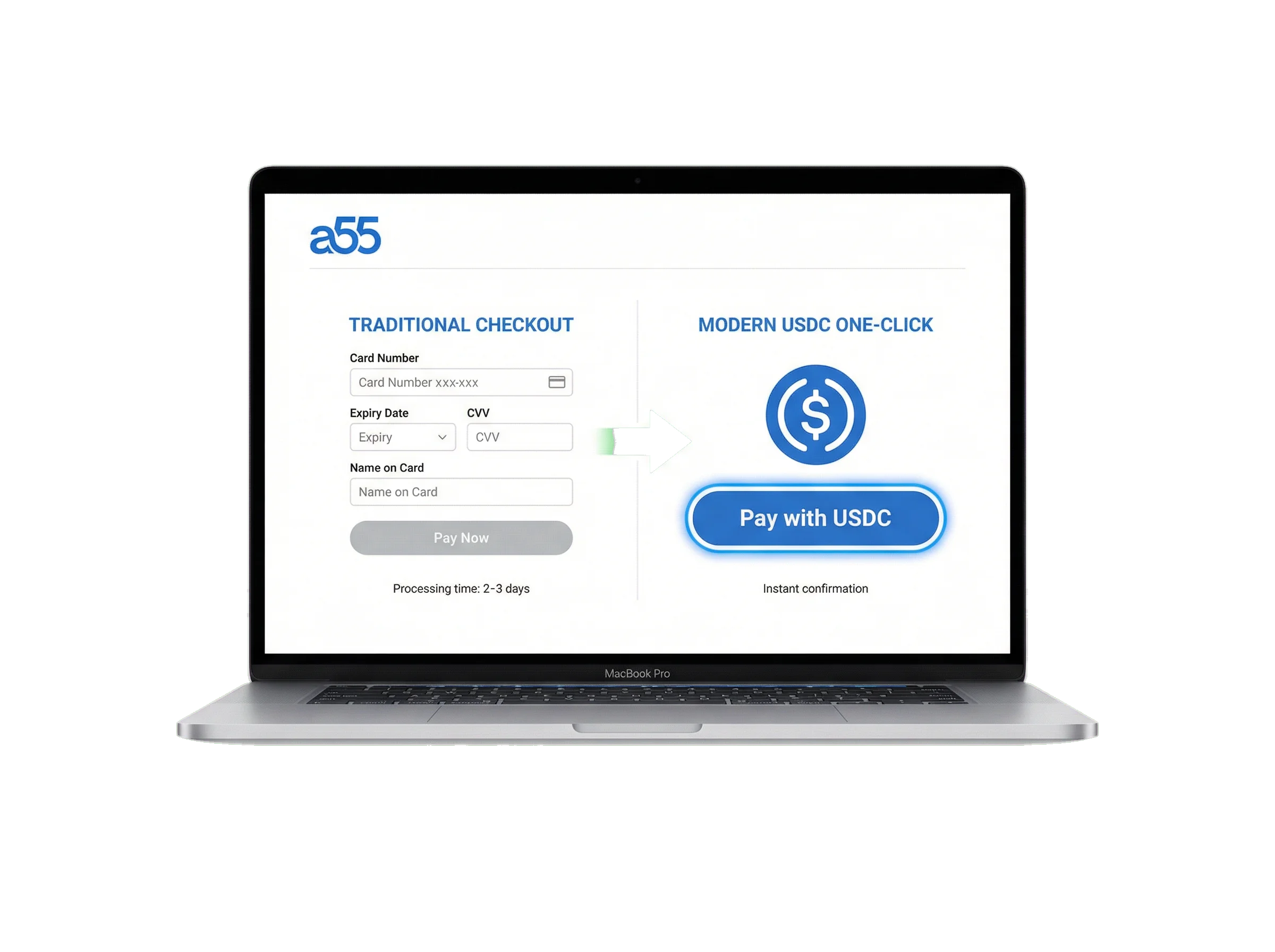
The core of a one-click stablecoin checkout is an SDK that abstracts the complexity of blockchain interactions. Instead of requiring customers to manually connect wallets, copy addresses, or confirm gas fees, the SDK handles the connection and signature verification in the background. This creates a user experience that mirrors traditional credit card processing, where the payment happens instantly without the user needing to understand the underlying technology. As noted by Owlting, this design ensures that stablecoin payments feel like a standard merchant workflow rather than a blockchain experiment [src-serp-7].
For the merchant, the technical architecture relies on a backend system that listens for transaction confirmations. When a customer initiates a payment, the SDK generates a cryptographic signature. The merchant’s server verifies this signature against the blockchain to confirm the transaction is valid and irreversible. Once confirmed, the system triggers a webhook to the merchant’s order management platform, signaling that funds are secured. This webhook mechanism is critical for automation, allowing inventory to be reserved and orders to be fulfilled only after the payment is fully settled on-chain.
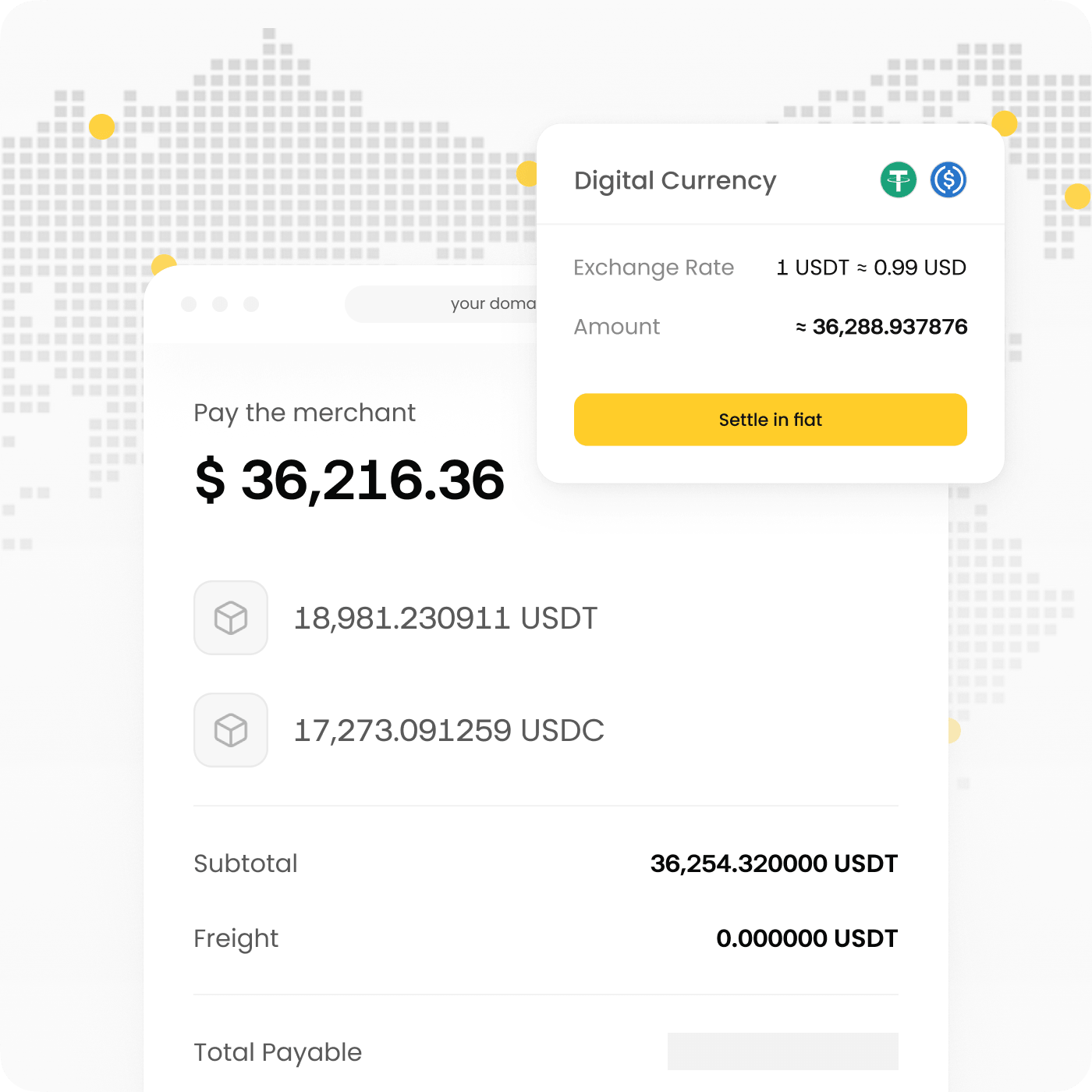
Settlement is the final technical layer. While the customer pays in a stablecoin like USDC, most merchants prefer to receive fiat currency to cover operational costs. The payment processor’s architecture includes an automated conversion engine that swaps the stablecoin for fiat at the time of settlement. This conversion happens off-chain or through a liquidity provider, meaning the merchant receives USD in their bank account within a standard settlement window, while the customer enjoys the speed and low fees of blockchain transfers. This separation of payment rails and settlement currency allows merchants to adopt crypto payments without exposing their balance sheets to volatility.
Implementation checklist for stablecoin payments
One-Click Stablecoin Checkout works best as a clear sequence: define the constraint, compare the realistic options, test the tradeoff, and choose the path with the fewest hidden costs. That order keeps the advice usable instead of decorative. After each step, pause long enough to check whether the recommendation still fits the reader's actual situation. If it depends on perfect timing, unusual access, or a best-case budget, include a simpler fallback.
Frequently asked questions about stablecoin checkout
How do I pay with stablecoin?
To pay with stablecoins, you need a compatible digital wallet that supports the specific token (such as USDC or USDT) and the blockchain network your merchant accepts. Once funded, you initiate a transfer from your wallet to the merchant’s payment address. Settlement occurs in near real-time, and the transaction is secured by the underlying blockchain’s consensus mechanism rather than a traditional banking intermediary.
What does BVNK do?
BVNK provides the infrastructure that allows merchants to accept stablecoins directly within their existing checkout flows. Rather than forcing customers to navigate complex crypto exchanges, BVNK’s integration enables a "one-click" experience where the payment is processed and settled in stablecoins, bridging the gap between traditional e-commerce platforms and decentralized finance rails.
Who is the payment provider for stablecoin?
Major payment processors like Checkout.com have partnered with crypto-native firms to enable stablecoin acceptance for enterprise merchants. For example, Checkout.com allows eligible businesses to accept stablecoin payments through partnerships with providers like Coinbase, integrating these digital assets into the same payment orchestration layers used for traditional credit cards and bank transfers.
No comments yet. Be the first to share your thoughts!