
Why one-click stablecoin checkout matters
Traditional payment rails are built for a slower era. Credit card networks require days to settle funds, charge high interchange fees, and restrict cross-border transactions with currency conversion penalties. For global commerce, these friction points eat directly into margins and frustrate customers who expect instant confirmation.
One-click stablecoin checkout removes these bottlenecks by leveraging blockchain infrastructure. Stablecoins, which are cryptocurrencies pegged to stable assets like the US dollar, allow merchants to accept payments that settle in seconds rather than days. This speed is not just a convenience; it is a fundamental shift in how capital moves across borders.
The cost advantage is equally significant. While credit card processors typically charge 1.5% to 3.5% per transaction, stablecoin transfers often cost a fraction of a cent, regardless of the transaction size or geographic distance. This efficiency is particularly valuable for high-volume or low-margin businesses that cannot absorb traditional processing fees.
Beyond cost and speed, stablecoin payments offer transparency and programmability. Every transaction is recorded on a public ledger, reducing disputes and chargebacks. The underlying technology also allows for automated settlement and integration with decentralized finance (DeFi) protocols, opening new avenues for treasury management and liquidity.
As digital commerce expands globally, the ability to accept payments instantly and cheaply becomes a competitive necessity. One-click stablecoin checkout is not just an alternative payment method; it is the next phase of digital commerce, offering a more efficient and inclusive financial infrastructure for businesses of all sizes.
How one-click stablecoin checkout works
A stablecoin is a cryptocurrency pegged to an external asset, typically the US dollar, to maintain a fixed value. This peg allows merchants to accept digital payments without the volatility of assets like Bitcoin. The technology behind one-click stablecoin checkout simplifies this process, turning complex blockchain interactions into a familiar, seamless experience for the shopper.
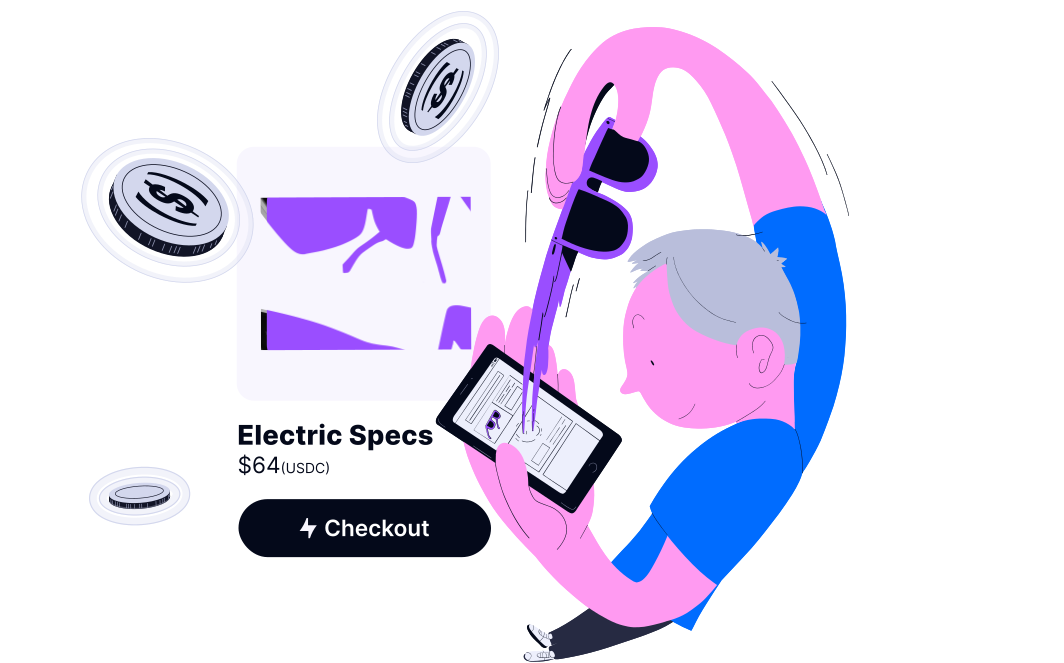
The customer chooses a stablecoin option at checkout. Modern SDKs detect the user’s browser wallet or offer a built-in fiat on-ramp, allowing payment via credit card or bank transfer if the user lacks crypto assets.

The SDK securely connects to the user’s wallet or processes the fiat transaction. It manages the necessary gas fees and network selection, ensuring the transaction is broadcast to the blockchain without requiring the user to understand technical details.
Once confirmed, the stablecoin (such as USDC) settles in the merchant’s wallet. Because the value is pegged to the dollar, the merchant receives the exact amount owed, eliminating exchange rate risk during the transaction window.
The stability of the asset is critical for this flow. As shown in the chart above, USDC maintains a tight peg to the US dollar, ensuring that the value transferred from the customer matches the value received by the merchant.
Top one-click stablecoin checkout providers
Choosing the right SDK depends on your tech stack and target market. The leading providers—Polygon Pay, TransFi, BVNK, and Crossmint—offer distinct advantages for merchants seeking one-click stablecoin checkout. Below is a side-by-side comparison of their core capabilities, followed by a closer look at each solution.
Comparison of Key Features
| Provider | Supported Chains | Settlement Speed | Fee Structure |
|---|---|---|---|
| Polygon Pay | Polygon, Ethereum | ~5 seconds | Low transaction fees |
| TransFi | Multi-chain | Real-time | Variable by chain |
| BVNK | Multi-chain | Near-instant | Competitive rates |
| Crossmint | Multi-chain | Real-time | API-based pricing |
Polygon Pay
Polygon Pay focuses on speed and low costs. It enables merchants to receive stablecoin payments in approximately five seconds. The platform integrates directly with the Polygon network, reducing transaction fees to pennies. This makes it ideal for high-volume, low-margin transactions. Merchants can reach a global customer base without the friction of traditional banking rails.
TransFi
TransFi offers a one-click integration for e-commerce stores. Its solution supports multiple currencies and uses AI-powered smart routing to optimize payment paths. This approach ensures that transactions are processed efficiently, regardless of the underlying blockchain. The platform is designed for merchants who need flexibility and reliability in their crypto checkout flow.
BVNK
BVNK allows businesses to build custom stablecoin strategies. It provides a one-click setup for receiving payments from customers. The platform supports multi-chain transactions, enabling merchants to accept stablecoins across various networks. This flexibility is useful for businesses operating in diverse crypto ecosystems.
Crossmint
Crossmint provides a comprehensive digital asset checkout API. It supports hosted, embedded, and headless integrations, giving developers full control over the user experience. The platform allows users to buy digital assets with credit cards, eliminating the need for a crypto wallet. This feature broadens the potential customer base for merchants accepting crypto payments.
Integrating a stablecoin checkout SDK
Setting up a one-click stablecoin checkout SDK is a structured process that bridges your existing e-commerce platform with blockchain networks. The goal is to minimize friction for both developers and shoppers, ensuring that transactions settle quickly and securely. Most providers offer dedicated documentation to guide this workflow, which typically follows a predictable sequence of configuration steps.
Begin by creating an account with your chosen provider and generating your API keys. These credentials act as the secure handshake between your merchant dashboard and the payment gateway. You will need to configure your environment variables to store these keys safely, ensuring they are never exposed in client-side code or public repositories.
Next, install the provider’s software development kit (SDK) into your project. This usually involves adding a package via your preferred package manager (e.g., npm, yarn, or pip). The SDK provides the necessary functions to create payment intents, handle user authentication, and manage the checkout UI components that your customers will interact with.
Set up webhook endpoints on your server to receive real-time updates about transaction status. Since blockchain confirmations can take time, webhooks ensure your system knows when a payment is initiated, confirmed, or failed. This step is critical for automating order fulfillment and updating your inventory systems without manual intervention.
Before going live, use the provider’s sandbox environment to simulate transactions. This allows you to verify that your API keys, SDK integration, and webhook handlers are working correctly without moving real funds. Most providers offer test tokens and mock scenarios to help you debug edge cases like failed confirmations or currency mismatches.
Once testing is complete, switch your API keys to production mode and deploy your changes. Monitor the first few transactions closely to ensure that settlement data flows correctly to your backend. After a successful initial run, your one-click stablecoin checkout is ready to accept payments globally.
After integration, you can monitor performance through the provider’s dashboard. Tracking metrics like conversion rates and transaction success times helps you optimize the user experience. With a stablecoin checkout SDK in place, you reduce reliance on traditional banking rails and open your store to a global audience.
Common questions about stablecoin payments
Stablecoin payments rely on pegging the token to an external asset, usually the US dollar, to maintain a fixed value and predictable pricing for merchants and consumers alike.
Can you cash out stablecoins?
Yes, converting stablecoins to cash is straightforward. The most common method is selling them on cryptocurrency exchanges for fiat currency, which generally offers reliable liquidity and simplicity for users looking to exit the ecosystem.
Is one-click stablecoin checkout safe?
Security depends on the underlying blockchain and the SDK provider. Reputable providers use audited smart contracts and comply with financial regulations to ensure funds are secure during the transaction process.
What are the fees for stablecoin transactions?
Fees are typically lower than traditional credit card processing. They consist of small blockchain network gas fees and a minimal payment processing fee charged by the checkout provider, avoiding the high interchange fees of card networks.
No comments yet. Be the first to share your thoughts!