
Why one-click stablecoin checkout matters now
The friction of traditional cross-border payments is finally meeting a viable alternative. For merchants and consumers alike, the promise of one-click stablecoin checkout isn't just about faster settlement times; it's about fundamentally lowering the cost of doing business globally. In 2026, regulatory clarity has transformed stablecoins from a speculative asset class into a compliant infrastructure layer, allowing businesses to integrate them with the same ease as credit card processors.
Stablecoins are designed to maintain a stable value by being pegged to a reference asset, most commonly a fiat currency like the US dollar. This peg is the critical enabler. Unlike volatile cryptocurrencies, stablecoins provide the price predictability required for retail and wholesale commerce. When a customer pays with USDC or USDT, the merchant knows exactly what they will receive, eliminating the need for complex hedging strategies or immediate conversion to local currency.
The economic rationale is straightforward. Traditional wire transfers can take three to five business days to clear, incurring fees at every intermediary bank along the way. Stablecoin transactions settle in seconds on the blockchain, with fees often less than a cent. This efficiency is particularly transformative for micro-transactions and cross-border remittances, where traditional banking rails are economically unviable. The speed and cost advantages create a compelling use case for merchants looking to expand their global reach without expanding their operational overhead.
Trust in this system relies on the stability of the underlying asset. The following chart demonstrates the price stability of USDC against the US dollar, illustrating why it serves as a reliable medium of exchange rather than a speculative investment.
As regulatory frameworks solidify, the barrier to entry for adopting one-click stablecoin checkout continues to drop. Major payment processors are building native support, allowing merchants to accept stablecoins without managing private keys or navigating complex blockchain interactions. This shift marks the transition of stablecoins from a niche crypto-native tool to a mainstream payment option for the global economy.
Leading SDKs for one-click stablecoin checkout
The infrastructure for one-click stablecoin checkout has shifted from experimental integrations to enterprise-grade solutions. Four providers currently dominate the landscape by offering distinct advantages in fees, speed, and fiat integration. Choosing the right SDK depends on whether your priority is minimizing transaction costs or unifying crypto payments with traditional fiat rails.
Stripe
Stripe remains the most familiar entry point for merchants already using its ecosystem. Its stablecoin integration allows you to accept payments in USDC and other major stablecoins directly within your existing checkout flow. The primary value proposition is seamless unification; you do not need to manage separate crypto wallets or reconciliation processes. Funds settle in your preferred fiat currency, shielding your business from crypto volatility. This approach is ideal for merchants who want to offer crypto payments without adding operational complexity or treasury management overhead.
Volt
Volt focuses on simplifying the merchant experience by treating stablecoins like any other payment method. Their "Pay with Stablecoins" solution unifies fiat and regulated stablecoins on a single, secure checkout interface. Beyond just processing, Volt is building a unified merchant treasury solution, which helps businesses manage the digital assets they receive. This SDK is particularly suited for merchants who want to accept crypto without exposing themselves to price fluctuations or regulatory friction, effectively bridging the gap between traditional e-commerce and digital assets.
Checkout.com
Checkout.com partners with Coinbase to bring stablecoin acceptance to eligible enterprise merchants. This integration leverages Coinbase's custody and compliance infrastructure, providing a robust layer of security for high-volume transactions. The partnership allows merchants to accept stablecoins while relying on Coinbase's regulatory standing. This option is best for large-scale enterprises that require institutional-grade custody solutions and are willing to plan around the eligibility criteria associated with Coinbase's enterprise partnerships.
Polygon Pay
For merchants prioritizing speed and low costs, Polygon Pay offers a compelling alternative. Built on the Polygon network, this solution enables instant settlements in approximately five seconds with fees reduced to pennies. It is designed for high-frequency transactions where traditional banking rails or slower blockchain networks would create friction. Polygon Pay allows you to get paid in real-time, making it an excellent choice for micro-transactions, gaming, or any application where latency and cost are critical barriers to conversion.
Comparison of Key Features
The following table compares the primary differentiators of these four providers to help you select the best fit for your technical and business requirements.
| Provider | Settlement | Fee Structure | Best Use Case |
|---|---|---|---|
| Stripe | Fiat | Standard processing rates | Merchants avoiding crypto volatility |
| Volt | Fiat/Crypto | Competitive rates | Unified treasury and checkout |
| Checkout.com | Fiat/Crypto | Enterprise pricing | High-volume enterprise compliance |
| Polygon Pay | Instant Crypto | Pennies per tx | High-speed, low-cost transactions |
Integrating USDC payment gateways in 2026
Building a one-click stablecoin checkout requires bridging the gap between blockchain transactions and traditional merchant settlement. The goal is to make the payment process invisible to the user while ensuring the backend receives fiat-equivalent value. This section outlines the technical workflow for integrating a USDC payment gateway, focusing on the SDK implementation and settlement logic.
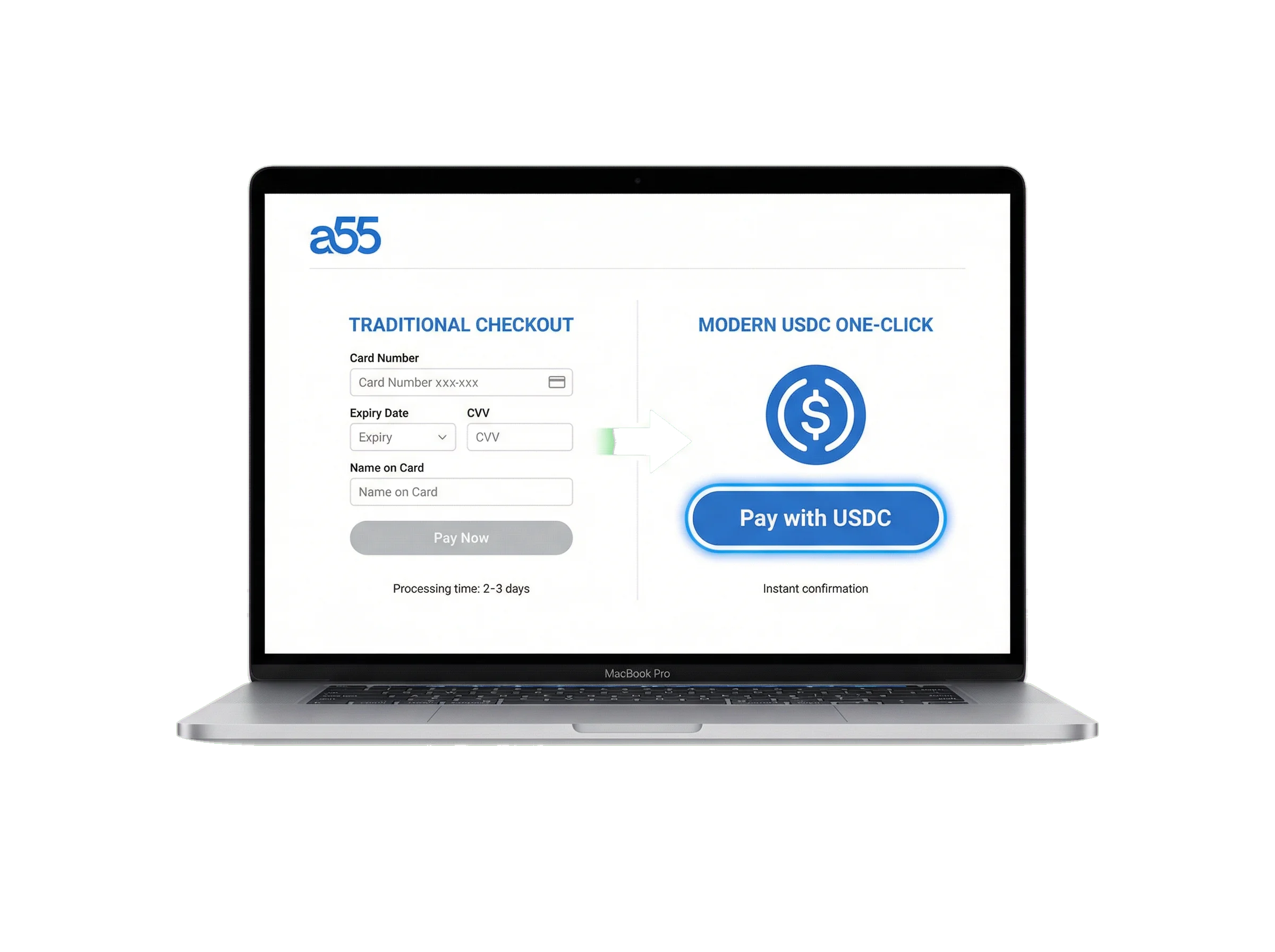
Begin by choosing a payment processor that supports USDC on supported networks like Polygon or Ethereum. Look for providers that offer automatic conversion to fiat (USD) to eliminate volatility risk for your business. Ensure the SDK supports your frontend framework (React, Vue, etc.) and offers robust webhook support for transaction confirmations.
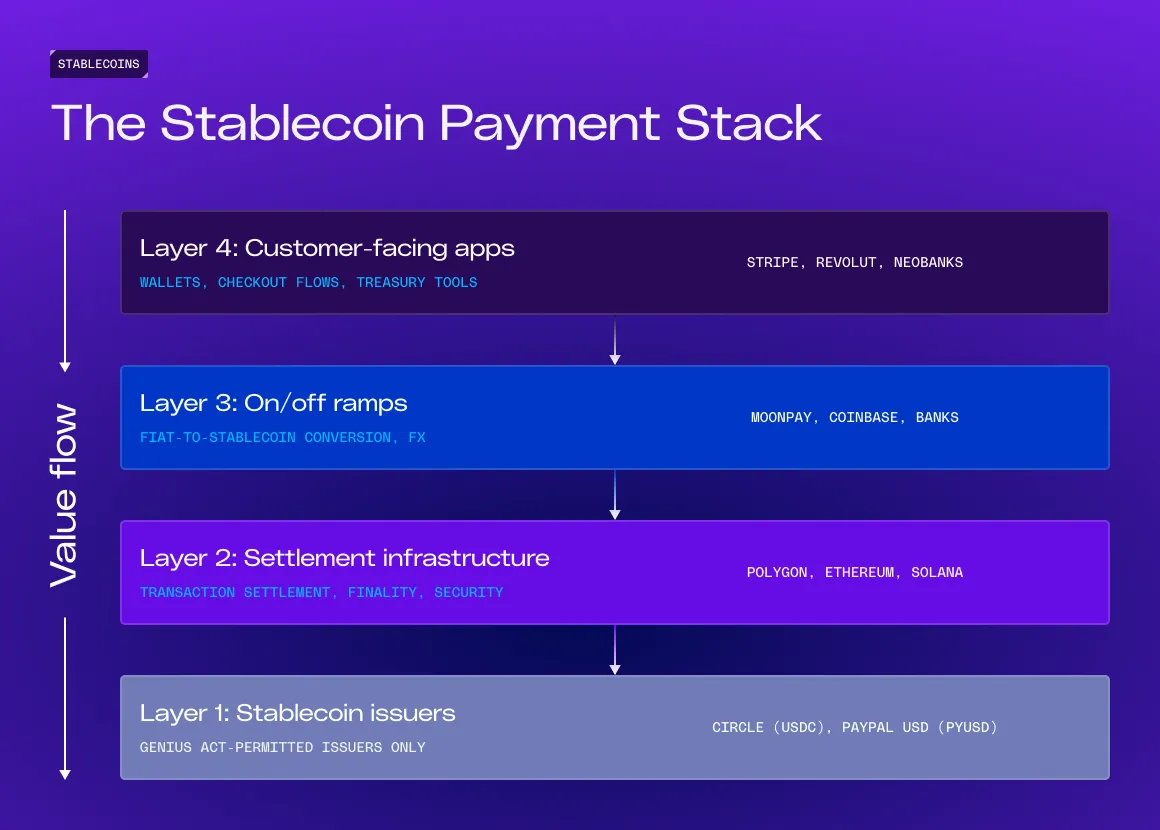
Integrate the provider’s SDK into your checkout flow. Configure the currency parameter to USDC and set the settlement_currency to USD. This tells the gateway to accept USDC but settle your bank account in dollars. Set up webhooks to listen for payment_confirmed events, which trigger your order fulfillment system only after the blockchain transaction is verified.
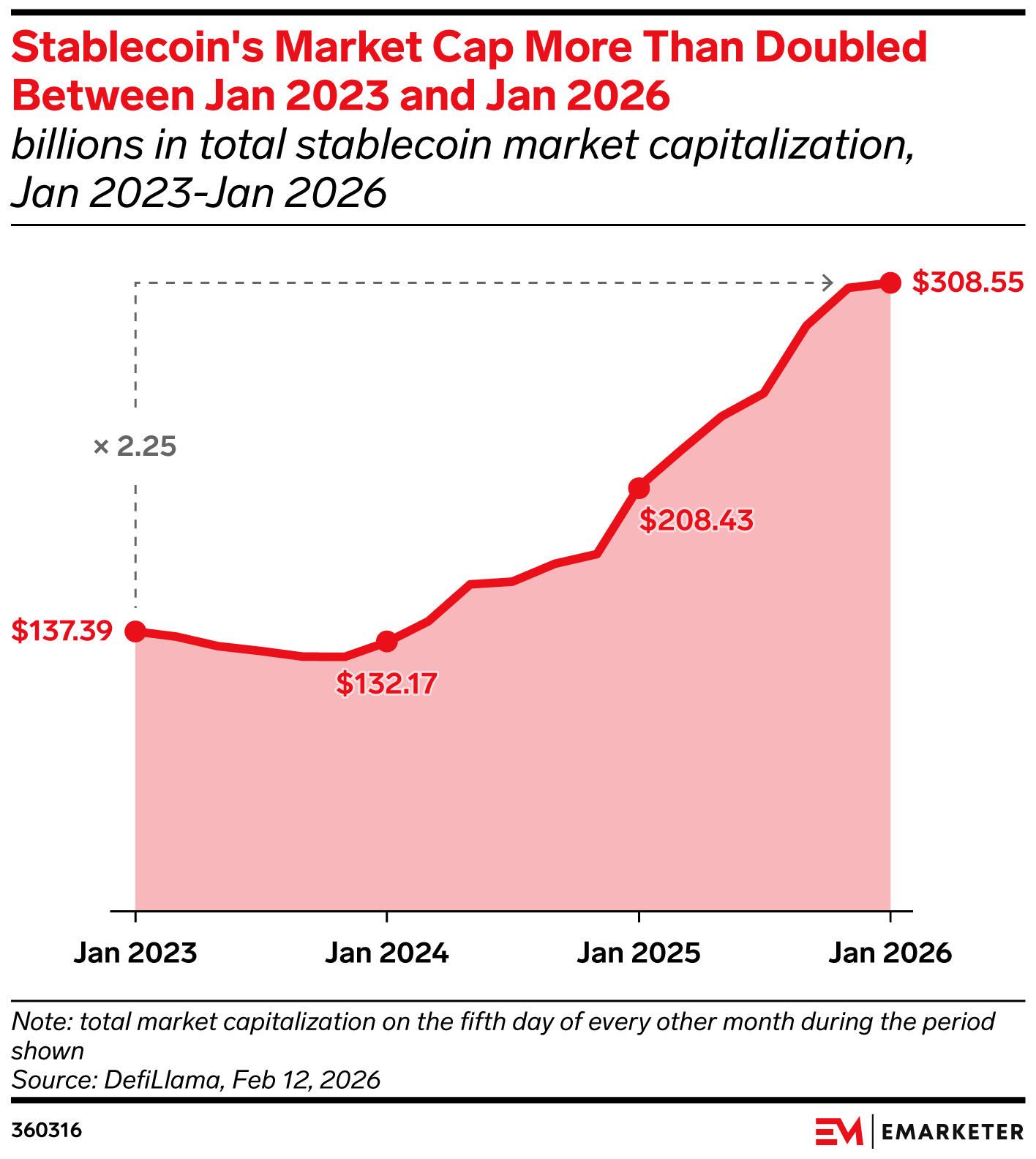
Design the UI to resemble a standard credit card or Apple Pay button. When clicked, the SDK triggers a wallet connection (via WalletConnect or injected wallets). The user reviews the USDC amount and gas fee (if applicable) and signs the transaction. The SDK handles the broadcast and polling for confirmation, abstracting away the blockchain complexity.
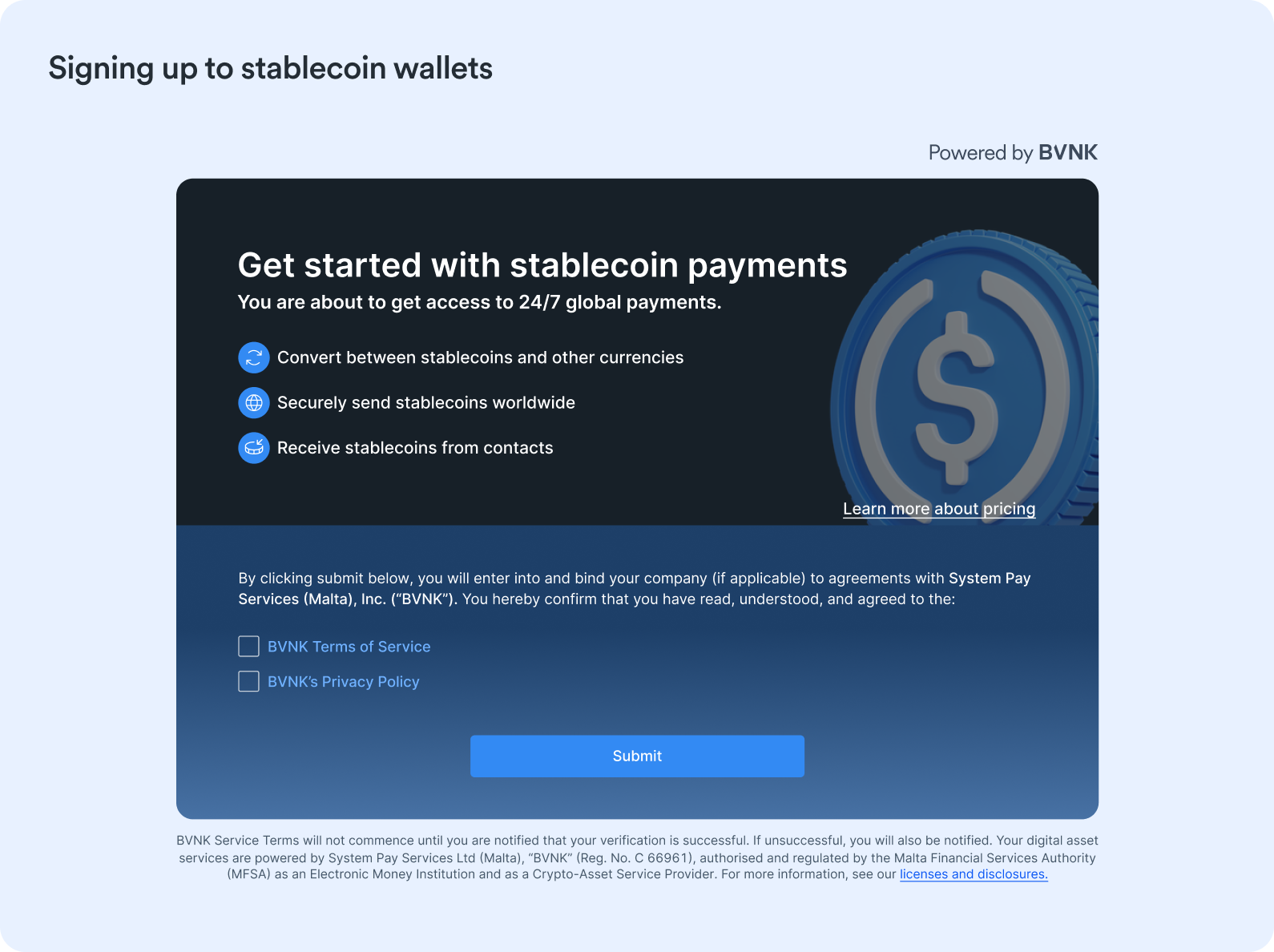
Once the payment is confirmed, the gateway processes the conversion and initiates the fiat transfer to your merchant account. Use the provider’s dashboard or API to reconcile transactions. Most gateways provide a daily settlement report that matches your internal order IDs with blockchain transaction hashes, simplifying accounting and tax reporting.
How regulation shapes merchant treasury
The regulatory landscape is shifting from ambiguity to explicit frameworks, fundamentally changing how merchants can integrate one-click stablecoin checkout. In the United States, the GENIUS Act provides a clear roadmap for stablecoin issuers, mandating that reserves be held in high-quality liquid assets like cash or short-term Treasuries. This requirement reduces counterparty risk and ensures that the digital dollar backing each transaction remains fully backed and redeemable.
Similarly, the European Union’s Markets in Crypto-Assets (MiCA) regulation has established a comprehensive license for stablecoin issuers operating within the bloc. By setting strict standards for governance, transparency, and redemption, MiCA creates a compliant environment that encourages institutional adoption. For merchants, this means fewer legal gray areas and a more predictable compliance burden when processing cross-border payments.
This shift transforms stablecoins from niche experimental assets into regulated financial instruments. Merchants can now manage their treasury with greater confidence, knowing that the stablecoins they accept are backed by auditable, high-grade assets. This stability is essential for maintaining cash flow integrity when using one-click stablecoin checkout for high-volume transactions.
Frequently asked questions about stablecoin checkout
Stablecoin payments are moving from experimental to standard, yet confusion remains about how they actually work in a checkout flow. Here are the most common questions from consumers and merchants navigating one-click stablecoin checkout.
For merchants, the barrier to entry has lowered significantly. Platforms like Stripe and Checkout.com now offer APIs that allow businesses to accept stablecoins alongside fiat, effectively unifying the payment experience for global customers.
If you are considering integrating one-click stablecoin checkout, start with a payment processor that handles the conversion to fiat automatically. This removes volatility risk and simplifies accounting, allowing you to focus on the customer experience rather than blockchain mechanics.
No comments yet. Be the first to share your thoughts!