
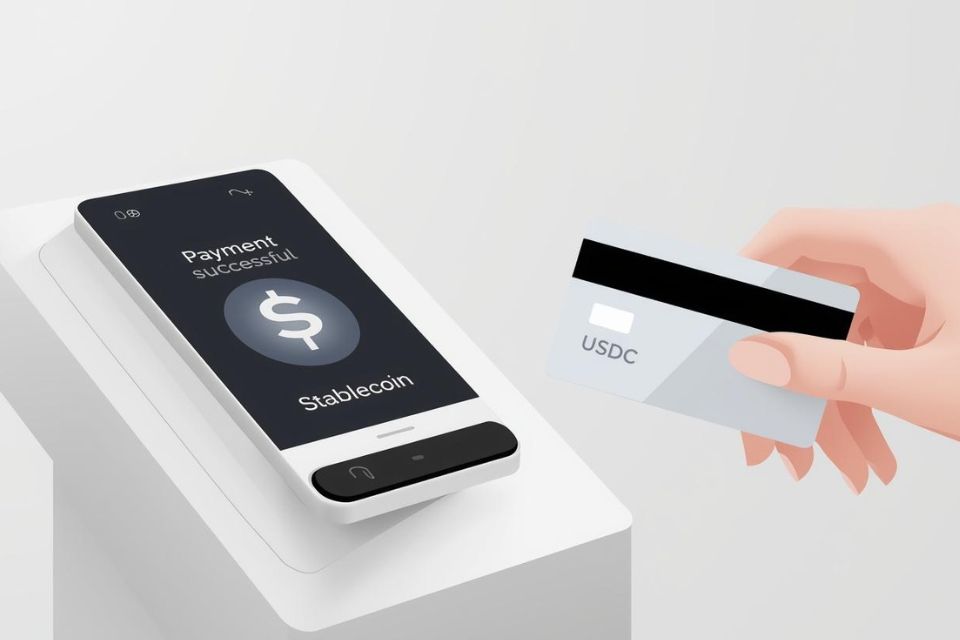
Why one-click stablecoin checkout matters now
The primary barrier to stablecoin adoption in e-commerce has historically been user experience, not technology. Traditional crypto payments require customers to navigate complex wallet setups, manage private keys, and manually approve blockchain transactions. This friction creates a high abandonment rate that outweighs the benefits of lower processing fees for most merchants. The shift toward one-click stablecoin checkout SDKs addresses this by abstracting the underlying blockchain complexity into a familiar, seamless payment flow.
One-click checkout transforms stablecoins from a niche asset into a practical currency for global commerce. By integrating SDKs from providers like Checkout.com, merchants can accept stablecoin payments without requiring customers to interact directly with wallets or manage gas fees. This capability allows eligible enterprise merchants to capture global demand more effectively, offering consumers a payment method that combines the speed of digital transfers with the simplicity of card payments [[src-serp-1]].
The business case for 2026 rests on three pillars: speed, cost, and conversion. Traditional cross-border payments often take days to settle, while stablecoin transactions confirm in minutes or seconds. This immediacy improves cash flow for merchants and reduces the risk of chargebacks. Also, the elimination of intermediary banks and the low transaction fees associated with stablecoins provide a significant margin advantage over traditional payment processors. As integration capabilities mature, the one-click model becomes the standard for frictionless global commerce.
How the one-click experience abstracts the blockchain
A one-click stablecoin checkout SDK functions as a middleware layer between your payment gateway and the blockchain. Instead of forcing customers to navigate wallet connections, seed phrase backups, or manual network selection, the SDK handles the complex cryptography and transaction broadcasting in the background. The merchant receives a standard payment confirmation, while the SDK manages the underlying on-chain settlement. This abstraction is the primary differentiator for adoption, as it removes the friction that typically prevents non-crypto natives from completing a purchase.
The "one-click" mechanism typically operates through one of three integration patterns. Hosted checkout redirects the user to a secure, SDK-managed window where they can pay via credit card (with the SDK converting to stablecoin) or connect a wallet. Embedded SDKs render the payment interface directly within your site’s UI, maintaining brand consistency while still offloading the crypto logic. Headless APIs provide the raw transaction data for developers building fully custom flows. Each pattern achieves the same goal: the customer perceives a simple checkout, while the merchant receives fiat-equivalent value or stablecoin without managing private keys.
Behind the scenes, the SDK automates gas fee sponsorship and network routing. For users paying with traditional methods, the SDK acts as a custodian, purchasing the stablecoin on a decentralized exchange or via a fiat on-ramp partner, then transferring it to the merchant’s wallet. For users with existing wallets, the SDK handles the transaction signing and broadcasting to the appropriate blockchain network, ensuring the transaction confirms quickly and cheaply. This process happens in milliseconds, invisible to the end user.
One-Click Stablecoin Checkout SDKs for 2026
The shift toward one-click stablecoin checkout is no longer about speculative trading; it is about friction reduction in everyday commerce. For merchants, the primary differentiator is not just the ability to accept USDC or USDT, but the speed at which a customer can complete a transaction without leaving the native shopping experience. The leading SDKs in 2026 have moved beyond simple wallet connectors to offer embedded, zero-code, and headless solutions that mimic the familiarity of Apple Pay or Google Pay.
When evaluating these providers, the focus should be on integration capability, supported chains, and the developer experience. A robust SDK must handle the complexity of on-chain settlement while presenting a seamless UI to the end-user. Below is a comparative analysis of the top providers shaping the landscape this year.
| Provider | Integration Model | Supported Chains | Developer Experience | Settlement Speed |
|---|---|---|---|---|
| Crossmint | Hosted/Embedded/Headless | Multi-chain (EVM, Solana, Polygon) | API-first with SDKs for web/mobile | Near-instant on-chain |
| Checkout.com | Enterprise API | Ethereum, Polygon, BNB Chain | Unified payments API | T+0 via partner rails |
| OwlPay | Gateway Acquiring | Multi-chain (EVM, L2s) | Standard payment gateway flow | Batched or instant options |
| TransFi | Zero-code Widget | Multi-chain (EVM, BSC, Polygon) | No-code embed | Near-instant on-chain |
Crossmint has established itself as a leader in digital asset checkout by offering a highly flexible API-first approach. Their Digital Asset Checkout SDK supports hosted, embedded, and headless integrations, allowing merchants to choose the level of control they need. Crossmint’s strength lies in its multi-chain support, including EVM-compatible networks, Solana, and Polygon, which broadens the potential user base. For developers, the API-first design means they can build custom checkout flows that fit precisely into their existing tech stack without being locked into a rigid template [src-3].
Checkout.com brings traditional enterprise payment infrastructure into the crypto space. Their stablecoin acceptance, developed in partnership with Coinbase, allows eligible enterprise merchants to accept stablecoins through their existing unified payments API. This is particularly advantageous for large retailers who already use Checkout.com for fiat transactions, as it allows them to add crypto capabilities without managing a second vendor. The integration is designed for scale, leveraging established compliance and risk management frameworks [src-1].
OwlPay positions itself as an all-in-one payment gateway solution. It supports both stablecoin and credit card payments, helping businesses manage the entire flow from checkout to payout. OwlPay’s approach is less about custom developer APIs and more about providing a straightforward acquiring solution. This makes it a viable option for merchants who want a single point of contact for all payment processing, including the complexities of crypto settlement and fiat conversion [src-6].
TransFi focuses on speed and simplicity with its zero-code widget. TransFi Checkout provides a single, embeddable widget that allows merchants to accept stablecoins and crypto instantly without any coding. This is ideal for smaller merchants or those with limited technical resources who want to start accepting crypto immediately. The trade-off is less customization compared to API-first solutions like Crossmint, but the ease of setup is unmatched [src-7].
The choice between these providers depends on the merchant’s technical capacity and scale. Enterprise players with existing payment infrastructure may prefer Checkout.com for its unified approach, while developers building custom platforms might favor Crossmint for its API flexibility. Smaller merchants seeking quick implementation may find TransFi’s zero-code widget the most practical entry point into stablecoin commerce.
Integrating stablecoin payments into existing stacks
Adding one-click stablecoin checkout to an existing e-commerce stack is less about rewriting the front end and more about swapping out the payment gateway layer. The goal is to let merchants accept USDT and other stablecoins without forcing customers to manage private keys or navigate complex wallet connections. By using specialized SDKs, businesses can treat crypto payments with the same ease as a traditional credit card transaction.
1. Choose the right SDK architecture
The first step is selecting an SDK that matches your technical infrastructure. Modern stablecoin tools offer three main integration models: hosted, embedded, and headless. A hosted checkout redirects users to a secure page managed by the provider, which is the fastest way to launch. An embedded SDK allows the payment form to live directly on your site, preserving your brand's look and feel. For headless architectures, the SDK provides APIs that let you build a completely custom interface while the provider handles the backend complexity and compliance.
2. Map your existing payment flows
Once the SDK is selected, you need to map how crypto payments fit into your current checkout funnel. Most merchants use a "one-click" model where the customer enters their email or phone number, and the system handles the rest. The SDK should support auto-conversion options, allowing you to receive fiat currency in your bank account immediately, or hold stablecoins for treasury purposes. This step ensures that your accounting and reconciliation processes remain intact while adding a new payment method.
3. Implement the API endpoints
Integration relies on secure API calls to process transactions. You will need to implement webhooks to listen for payment confirmations on the blockchain. Since stablecoins like USDT operate on various networks (Ethereum, Polygon, Solana), the SDK must abstract these differences so your code doesn't need to handle multiple chain-specific protocols. Official documentation from providers like Crossmint provides clear API schemas for handling token payments, ensuring that your integration is robust and secure.
4. Test with stablecoin peg stability in mind
Before going live, test the checkout flow under various network conditions. While stablecoins are designed to maintain a 1:1 peg with the US dollar, minor fluctuations can occur during high-volatility periods. Use a chart to monitor the stability of your chosen stablecoin during testing to ensure your pricing engine handles any micro-variations correctly. This step is critical for maintaining customer trust and preventing failed transactions due to price slippage.
5. Launch and monitor
After thorough testing, launch the one-click checkout option. Monitor transaction success rates and customer feedback closely. The primary advantage of this integration is the reduction in cart abandonment, as customers no longer need to manually copy addresses or confirm multiple wallet signatures. By keeping the experience seamless, you unlock a new demographic of crypto-native shoppers who prefer the speed of stablecoins over traditional banking delays.
No comments yet. Be the first to share your thoughts!