
Why stablecoin checkout SDKs matter in 2026
The conversation around cryptocurrency in e-commerce has shifted. We have moved past the experimental phase where merchants manually copied wallet addresses and waited for block confirmations. In 2026, the focus is on developer-first stablecoin checkout SDKs that integrate crypto payments directly into existing web flows. These tools are no longer niche experiments; they are standardized infrastructure designed to handle the complexity of blockchain transactions behind the scenes.
The primary driver for this shift is speed and cost. Traditional credit card networks can take days to settle funds, and merchants pay significant interchange fees. Stablecoin payments settle in near real-time, often within seconds or minutes, depending on the network. This near-instant settlement improves cash flow for businesses and reduces the risk of chargebacks, which remain a persistent headache for online retailers. As noted by industry leaders like Checkout.com, these payments are programmable and secure, allowing for automation via smart contracts without the friction of legacy banking rails [src-serp-1].
For developers, the value lies in abstraction. A stablecoin checkout SDK handles the heavy lifting: detecting wallet connections, managing gas fees, converting crypto to fiat if needed, and ensuring compliance. This allows e-commerce platforms to offer crypto-native payments without building a specialized blockchain team. Solutions like Coinbase Payments abstract the underlying Ethereum Layer-2 network complexity, enabling businesses to accept stablecoins like USDC with minimal integration effort [src-serp-5].
To understand the asset class driving this infrastructure, it helps to look at the stability of the underlying token. Stablecoins are pegged to fiat currencies, meaning their value does not fluctuate wildly like Bitcoin or Ethereum. This stability is critical for merchants who want to accept crypto without immediately converting it into a volatile asset.
The rise of these SDKs signals a maturation of the Web3 e-commerce landscape. By removing the technical barriers and leveraging the efficiency of blockchain settlement, stablecoin checkout solutions are becoming a practical alternative for global transactions. This is not just about adopting new technology; it is about building a more efficient, faster, and more inclusive payment ecosystem for the future of online trade.
Stripe Bridge: The legacy payment giant approach
Stripe has long served as the default infrastructure for online merchants, and its entry into stablecoin payments follows the same philosophy: remove friction. By treating crypto like just another payment method, Stripe allows existing merchants to accept USDC without rewriting their core payment logic. This approach lowers the barrier to entry significantly, as businesses do not need to hire specialized blockchain engineers to manage wallets or monitor gas fees.
The integration relies heavily on Stripe’s Payment Element, which abstracts the underlying blockchain complexity. When a customer selects a stablecoin option, the Payment Element handles the transaction flow, ensuring that the merchant receives settlement in their preferred currency while the customer pays in crypto. This abstraction is critical for mass adoption, as it hides the technical hurdles of wallet connections and network confirmations behind a familiar checkout interface.
For merchants already embedded in the Stripe ecosystem, the upgrade path is minimal. Documentation from Stripe confirms that launching stablecoin payments requires a single integration point, avoiding the heavy engineering lift typically associated with Web3 commerce.

This strategy positions Stripe as a bridge between traditional e-commerce and decentralized finance. Rather than forcing merchants to choose between legacy fiat rails and risky direct crypto integrations, Stripe offers a unified layer. The result is a checkout experience that feels identical to a credit card transaction, yet settles on-chain with the speed and transparency of stablecoin technology.
For a broader context on how legacy providers compare to native Web3 alternatives, the following table outlines the key differences in integration complexity and target audience.
| Feature | Stripe | Native Web3 SDK | Custodial Gateway |
|---|---|---|---|
| Integration Effort | Low (API wrapper) | High (Custom logic) | Medium |
| Settlement Currency | USD/EUR (via partner) | Crypto/USDC | USD/Crypto |
| Wallet Management | None (Abstracted) | Merchant-owned | Provider-managed |
| Target Audience | Traditional E-commerce | Crypto-native brands | Mixed |
Crossmint: Headless crypto checkout for Web3 natives
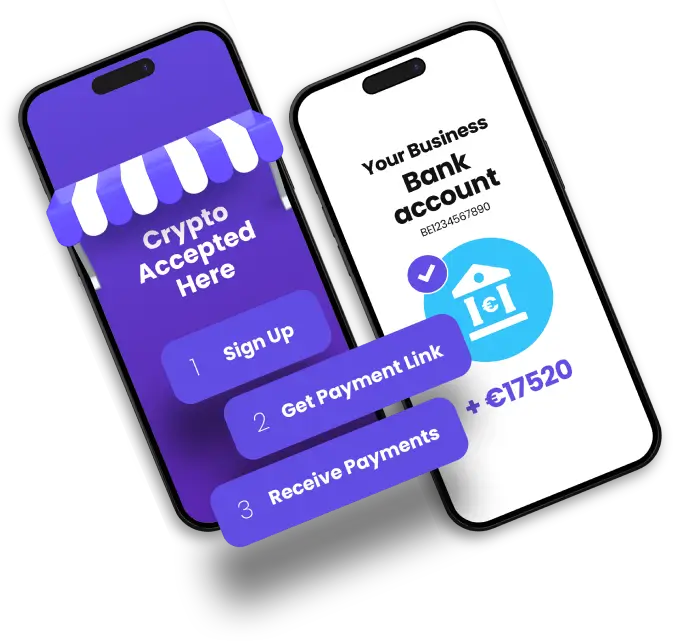
Crossmint operates as an API-first infrastructure layer designed for developers who need granular control over the payment experience. Rather than forcing merchants into a rigid, branded checkout window, Crossmint’s headless model allows you to embed payment logic directly into your existing application interface. This approach keeps the user journey seamless, ensuring that the act of paying with stablecoins feels like a native feature of your platform rather than a third-party interruption.
The platform’s primary strength lies in its ability to abstract blockchain complexity from the end user. Through its Digital Asset Checkout APIs, Crossmint supports hosted, embedded, and headless integrations that handle fiat-onramps automatically. A customer can pay with a credit card or bank transfer, and the system settles the transaction in stablecoins on your backend. This means you can accept crypto payments without requiring your customers to hold digital assets or navigate complex wallet setups initially.
For Web3-native e-commerce, this flexibility is critical. The SDKs support direct wallet-to-wallet transactions for users who already hold crypto, while simultaneously accommodating traditional fiat users who need a bridge into the ecosystem. By managing the conversion and settlement layers, Crossmint allows you to focus on product and user experience rather than the intricacies of blockchain routing.
Eco Routes and Circle USDCKit for direct settlement
When building a checkout flow that requires direct control over the blockchain layer, developer-centric SDKs are the standard. Tools like Eco Routes and Circle’s USDCKit let teams manage cross-chain bridging and settlement themselves, rather than relying on a managed payment processor to handle the complexity.
Eco Routes focuses on the bridging layer. It provides SDKs that help developers move assets across different blockchains efficiently. This is useful when your users pay with a stablecoin on a cheaper network, but you need the funds settled on your primary ledger. The SDK handles the routing and gas, reducing the friction of cross-chain payments.
Circle USDCKit offers a different approach. It is designed for direct integration with USDC on Ethereum and its Layer 2 networks. This tool is ideal for teams that want to keep their settlement on-chain while using Circle’s infrastructure to manage compliance and verification. It provides a more controlled environment for high-volume transactions where auditability is critical.
Comparison of Developer SDKs
The table below compares the core capabilities of these tools against managed providers. Managed services like Stripe handle the blockchain work for you, while SDKs like Eco and Circle require you to build the integration logic.
| Provider | Type | Supported Chains | Developer Control |
|---|---|---|---|
| Stripe | Managed | USDC (Ethereum, Polygon, Solana) | Low |
| Crossmint | Managed | Ethereum, Polygon, Solana, Base | Low |
| Eco Routes | SDK | Multi-chain (Bridging) | High |
| Circle USDCKit | SDK | Ethereum, Base, Polygon, Arbitrum | High |
Choosing between these options depends on your team’s technical resources. If you have a dedicated engineering team and need fine-grained control over transaction routing and settlement, SDKs are the better fit. If you want to launch quickly without managing blockchain infrastructure, a managed provider like Stripe is more efficient.
For teams building complex DeFi integrations, the flexibility of Eco Routes and Circle USDCKit is essential. They allow you to customize the user experience and manage risk directly, which is difficult with third-party processors.
How to choose the right stablecoin checkout SDK
Selecting a stablecoin checkout SDK requires aligning technical capabilities with your business model. The decision hinges on three factors: your existing tech stack, your target audience's crypto literacy, and your compliance obligations.
1. Evaluate supported chains and settlement options
Not all stablecoins are created equal. Determine which networks your customers prefer—USDC on Ethereum, Solana, or Base—and ensure the SDK supports those chains. More importantly, decide if you need automatic fiat settlement or if you are willing to hold crypto assets. Automatic settlement reduces risk but may incur higher fees.
2. Assess Web2 vs. Web3 user experience
If your audience is primarily Web2, the SDK must abstract away blockchain complexity. Look for solutions that support email-based onboarding or social logins, similar to how Coinbase Payments operates on its Base network. For Web3-native users, direct wallet connections and lower fees are often preferred over fiat rails.
3. Verify compliance and KYC/AML flows
Regulatory requirements vary by region. If you operate in the EU or US, the SDK must support robust KYC/AML checks. Some providers handle this entirely, while others require you to integrate third-party identity verification services. Choose a partner whose compliance framework matches your jurisdictional needs to avoid legal exposure.
4. Test the sandbox environment
Before committing, use the provider's sandbox to simulate transactions. Check for latency, error handling, and ease of integration. A clean developer experience (DX) often predicts a smoother production rollout. Pay attention to documentation clarity and support responsiveness during this phase.
5. Review pricing and hidden costs
Beyond transaction fees, look for currency conversion spreads, withdrawal fees, and minimum volume requirements. Some providers offer tiered pricing based on monthly volume. Ensure the total cost of ownership aligns with your margins, especially for high-volume, low-margin e-commerce products.
Frequently asked questions about stablecoin payments
What is the payment service provider for stablecoin? Coinbase operates Coinbase Payments, a full-stack stablecoin payment solution built on its Ethereum Layer-2 network, Base. The platform abstracts blockchain complexity so businesses can offer crypto-native payments without specialized teams.
Do stablecoin transactions cost less than credit cards? Stablecoin payments are fast, secure, and programmable. They settle in near real time and can be automated via smart contracts, without the high processing fees typical of traditional card networks.
How do I integrate stablecoin checkout into my store? Most providers offer dedicated SDKs that handle wallet connections and transaction verification. Integration usually requires connecting your existing e-commerce backend to the provider’s API, allowing you to accept USDC or USDT alongside fiat currencies.
Are stablecoin payments reversible? No. Once a stablecoin transaction is confirmed on the blockchain, it is irreversible. This eliminates chargeback fraud for merchants but requires customers to double-check wallet addresses before sending funds.
Which stablecoin is best for e-commerce? USDC is the most widely accepted stablecoin for online checkout due to its regulatory compliance and liquidity. USDT is also common but carries higher counterparty risk in some jurisdictions.
No comments yet. Be the first to share your thoughts!