
Why one-click stablecoin checkout matters now
The primary barrier to stablecoin adoption is not blockchain technology, but the checkout experience. Current crypto payments require users to manage seed phrases, select networks, and confirm gas fees—a process that feels alien to the average e-commerce shopper. This friction creates a disconnect between the utility of digital assets and the expectations of modern consumers who are accustomed to the speed of traditional credit card processing.
One-click stablecoin checkout bridges this gap by abstracting away the underlying complexity. By integrating SDKs that handle wallet abstraction, gas sponsorship, and automatic currency conversion, merchants can offer a payment flow that mirrors the familiarity of Apple Pay or PayPal. This shift transforms stablecoins from a niche speculative asset into a practical settlement layer for everyday transactions.
The business case rests on reliability and speed. Stablecoins settle on-chain in seconds, offering a predictable alternative to the variable hold times of traditional banking rails. For high-volume merchants, this means faster access to capital and lower chargeback risk. The focus is no longer on whether the technology works, but on making it invisible to the end-user.
Enterprise gateways add stablecoin rails
Legacy payment processors are integrating stablecoin support directly into their existing merchant infrastructure. This approach allows businesses to accept digital assets without abandoning familiar settlement workflows or integrating new, untested APIs. The primary value proposition is friction reduction: merchants can offer customers the speed and low cost of blockchain transactions while receiving fiat currency in their bank accounts, or settling directly in stablecoins if they choose.
Checkout.com has expanded its digital asset capabilities through strategic partnerships. Initially, the gateway enabled settlements in USDC via Fireblocks, providing a secure custody layer for enterprise clients. More recently, Checkout.com partnered with Coinbase to broaden stablecoin acceptance across its network of over 1,000 enterprise merchants. This integration allows eligible businesses to accept payments in major stablecoins, capturing global demand from consumers who prefer to pay with digital currency while maintaining the reliability of a traditional payment processor.
Stripe has also moved into this space, offering stablecoin checkout solutions that integrate with its existing point-of-sale and online payment systems. By leveraging its vast merchant base, Stripe provides a familiar interface for businesses to accept USDC and other stablecoins, reducing the technical barrier to entry for traditional retailers.
These integrations signal a shift from speculative crypto adoption to practical utility. For merchants, the decision often hinges on settlement options, supported tokens, and eligibility requirements.
| Gateway | Supported Tokens | Settlement Options | Eligibility |
|---|---|---|---|
| Checkout.com | USDC, USDT | Fiat or Stablecoin | Enterprise merchants |
| Stripe | USDC | Fiat or Stablecoin | Global merchants |
| Adyen | USDC | Fiat | Mid to large enterprises |
| Square | USDC | Fiat | US-based businesses |
The table above compares key features of major enterprise gateways. While all offer stablecoin acceptance, settlement mechanisms vary. Some gateways allow direct stablecoin settlement, appealing to businesses with crypto treasury strategies, while others automatically convert to fiat, prioritizing simplicity and regulatory compliance.
For most traditional merchants, the goal is not to become a crypto exchange but to offer more payment options. Stablecoin integration allows for faster cross-border settlements and lower transaction fees compared to traditional card networks. However, merchants must still navigate regulatory requirements and ensure their payment processors provide adequate security and compliance tools.
Native Web3 Checkout SDKs and APIs
Native Web3 SDKs and APIs provide the infrastructure for developers to build dedicated crypto storefronts with deep customization. Unlike generic payment gateways that treat crypto as a secondary option, these tools are designed from the ground up to handle wallet abstraction, cross-chain settlements, and stablecoin liquidity. They allow merchants to accept payments directly from user wallets while managing the complex backend logic of blockchain interactions.
CrossScale and AllScale
Platforms like CrossScale and AllScale offer stablecoin-native checkout solutions that prioritize simplicity for both merchants and customers. These SDKs enable the acceptance of major stablecoins such as USDC and USDT with minimal integration effort. The primary value proposition is the reduction of friction: merchants can accept payments without holding volatile assets, as these platforms often handle the conversion or settlement in stablecoin form. This approach is particularly effective for ecommerce businesses looking to onboard crypto users without building custom blockchain infrastructure.
Wallet Abstraction and One-Click Flows
Advanced SDKs are increasingly integrating wallet abstraction to remove the need for users to manage private keys or gas fees. By leveraging account abstraction (ERC-4337) standards, these tools allow for "one-click" checkout experiences where the wallet handles transaction signing in the background. This mimics the familiarity of traditional digital wallets like Apple Pay, significantly lowering the barrier to entry for non-technical users. The integration often involves a simple API call to initiate a payment request, after which the SDK manages the chain interaction and confirmation.
Integration Depth and Customization
For developers requiring full control over the checkout journey, native SDKs offer granular customization of the user interface and transaction flow. This allows brands to maintain their visual identity while securely processing blockchain transactions. The technical implementation typically involves embedding a lightweight widget or calling backend APIs to generate payment intents. This level of control is essential for high-volume merchants who need to manage transaction limits, retry logic, and specific chain routing to ensure the lowest fees and fastest settlement times.
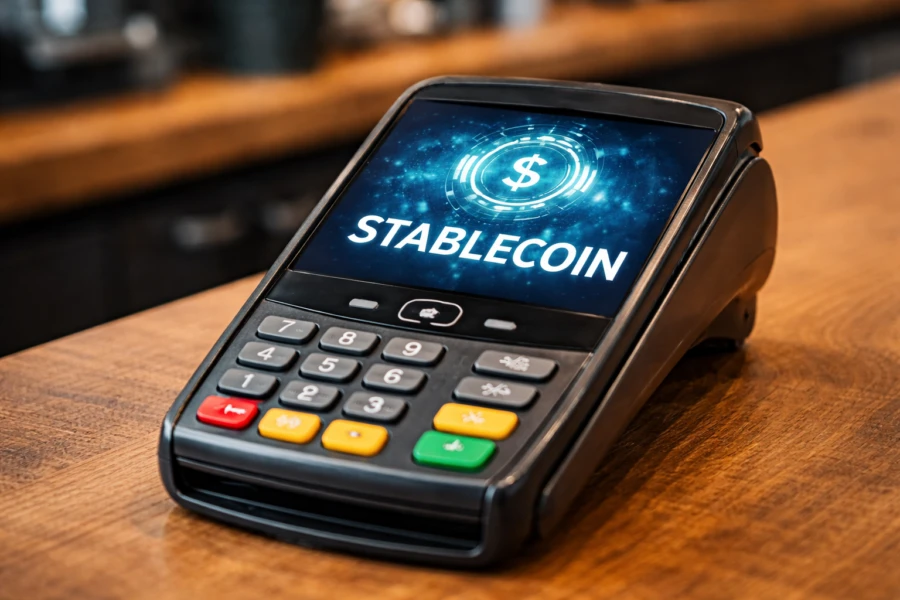
Market Context: Stablecoin Stability
The reliability of these checkout systems depends heavily on the stability of the underlying assets. Stablecoins are pegged to fiat currencies, but market dynamics can cause temporary deviations. Monitoring the stability of major stablecoins like USDC against the US dollar is critical for ensuring consistent pricing at the point of sale.
Integration complexity and developer experience
Building one-click stablecoin checkout requires navigating two distinct technical paths: traditional payment gateway APIs and Web3 wallet connection flows. The former mirrors the familiarity of Stripe or PayPal, abstracting blockchain complexity behind standard REST endpoints. The latter demands direct interaction with smart contracts and wallet providers, introducing significant overhead in handling private key security, gas estimation, and cross-chain compatibility.
Traditional integrations prioritize speed and simplicity. Providers like Crossmint offer APIs that allow users to purchase digital assets using credit cards without ever holding a crypto wallet, reducing integration time to approximately ten minutes. This approach shifts the burden of custody and compliance to the provider, making it ideal for mainstream merchants who lack specialized blockchain engineering resources. However, this convenience comes at the cost of higher transaction fees and less direct control over the settlement layer.
Conversely, direct Web3 integrations offer greater transparency and lower fees but introduce substantial friction. Developers must manage wallet connections, handle potential transaction failures due to network congestion, and ensure seamless user experiences across multiple chains. The technical effort here is not just about writing code; it is about designing fallback mechanisms for failed transactions and educating users on wallet interactions. For high-stakes financial applications, the reliability of the settlement layer often outweighs the initial integration complexity, pushing teams toward more robust, albeit slower, direct-to-blockchain solutions.
The choice between these paths depends on the target audience and risk tolerance. If the goal is frictionless adoption for non-technical users, a custodial or hybrid API solution is preferable. If the priority is sovereignty and lower long-term costs, investing in a direct Web3 integration is necessary. Both paths require rigorous testing, but the nature of that testing differs: one focuses on payment gateway stability, while the other centers on blockchain finality and wallet security.
Choosing the right stablecoin payment SDK
Use this section to make the One-Click Stablecoin Checkout decision easier to compare in real life, not just on paper. Start with the reader's actual constraint, then separate must-have requirements from details that are merely nice to have. A practical choice should survive normal use, maintenance, timing, and budget. If a recommendation only works in an ideal situation, call that out plainly and give the reader a fallback path.
-
Verify the basicsConfirm the core specs, condition, and fit before comparing extras.
-
Price the downsideLook for the repair, maintenance, or replacement cost that would change the decision.
-
Compare alternativesCheck at least two comparable options before treating one listing as the benchmark.
No comments yet. Be the first to share your thoughts!