
Why stablecoin checkout SDKs matter in 2026
The financial infrastructure for e-commerce is undergoing a quiet but structural shift. In 2026, stablecoin checkout SDKs have moved from experimental pilot programs to essential strategic components for high-volume merchants. This transition is no longer driven by speculative interest or crypto-native novelty, but by the tangible economics of lower transaction fees and the regulatory clarity provided by frameworks like the Genius Act.
The market data supports this pivot. Industry projections indicate that stablecoins will represent approximately 3% of all US dollar payments by the end of 2026, with expectations reaching 10% by 2031 [[src-serp-4]]. For merchants, this means that integrating stablecoin payments is becoming a baseline requirement for competitive pricing, particularly in cross-border transactions where traditional wire and card fees erode margins.
Adoption is being pulled by consumer demand for efficiency. Recent utility reports highlight that the primary drivers for stablecoin payment adoption are lower fees (cited by 30% of users), enhanced security (28%), and global access (27%) [[src-serp-8]]. Shoppers are increasingly willing to use USDC not because they are crypto enthusiasts, but because the checkout process offers a faster, cheaper alternative to legacy credit card networks.
For businesses, the risk calculation has changed. The "high-stakes" nature of this shift lies in the speed of adoption; early adopters of robust stablecoin SDKs are locking in lower processing costs and broader geographic reach before the market saturates. Integrating now is less about hedging against future regulation and more about capitalizing on the immediate cost advantages that stablecoins provide in the current payment landscape.
Top stablecoin checkout SDKs for 2026
Selecting the right payment infrastructure requires weighing transaction speed, supported networks, and settlement finality. In 2026, the market has consolidated around a few robust SDKs that bridge traditional e-commerce flows with on-chain liquidity. The following comparison focuses on the leading solutions: Coinbase Commerce, Crypto.com Pay, and Checkout.com’s stablecoin module. Each offers distinct advantages for merchants prioritizing either direct crypto custody or fiat-favorable settlement.
Comparison of Leading SDKs
The table below outlines the core technical and operational differences between the primary stablecoin checkout providers. Developers should prioritize the chain support and settlement model that aligns with their existing treasury operations.
| Provider | Primary Chains | Settlement | Integration |
|---|---|---|---|
| Coinbase Commerce | Ethereum, Base, Solana, Polygon | Crypto or Fiat | Low |
| Crypto.com Pay | Ethereum, BSC, Polygon, Arbitrum | Crypto or Fiat | Medium |
| Checkout.com | Ethereum, Base, Solana | Fiat (USD/EUR) | High |
Coinbase Commerce
Coinbase Commerce remains the standard for merchants seeking broad network support with minimal friction. Its SDK supports major Layer 1 and Layer 2 networks, including Ethereum, Base, and Solana, ensuring compatibility with the widest range of consumer wallets. The integration is straightforward, requiring only a few lines of code to generate payment requests.
The platform offers dual settlement options: receiving payments in stablecoins or converting them to fiat currency automatically. This flexibility reduces exposure to crypto volatility for traditional businesses. However, the reliance on Coinbase for custody means merchants must trust a centralized entity for final settlement, which may not suit decentralized finance (DeFi) purists.
Crypto.com Pay
Crypto.com Pay provides a similar feature set but distinguishes itself with deeper integration into its broader fintech ecosystem. It supports a diverse range of chains, including BSC and Arbitrum, which can offer lower transaction fees for high-volume, low-value payments. The SDK is designed for both web and mobile applications, offering robust tools for in-app checkout flows.
Settlement options mirror Coinbase Commerce, allowing merchants to hold crypto or convert to fiat. The primary trade-off is integration complexity; while still manageable, the SDK often requires more configuration to leverage its full suite of features compared to Coinbase’s streamlined approach. This makes it a stronger candidate for merchants already embedded in the Crypto.com merchant network.
Checkout.com Stablecoin Module
Checkout.com represents the enterprise-grade option, focusing on fiat settlement and compliance. Its stablecoin module allows merchants to accept USDC or USDT but immediately settles the funds in fiat currency (USD or EUR). This effectively removes cryptocurrency price risk from the merchant’s balance sheet, making it ideal for large-scale retailers who cannot tolerate volatility.
The integration complexity is higher due to the enterprise-level compliance checks and API structures. It requires a more sophisticated development team to implement but offers the highest level of financial safety for traditional business models. This solution is best suited for merchants who view stablecoins as a payment method rather than an asset class.
One-Click Stablecoin Checkout
The friction of entering wallet addresses and confirming blockchain signatures is the primary barrier to mass adoption. Modern Stablecoin Checkout SDKs solve this by abstracting the underlying blockchain complexity, creating a user experience that mirrors the simplicity of Apple Pay or digital wallets. For merchants, this shift is not merely about convenience; it is a critical lever for conversion rate optimization in an environment where every second of latency can cost a sale.
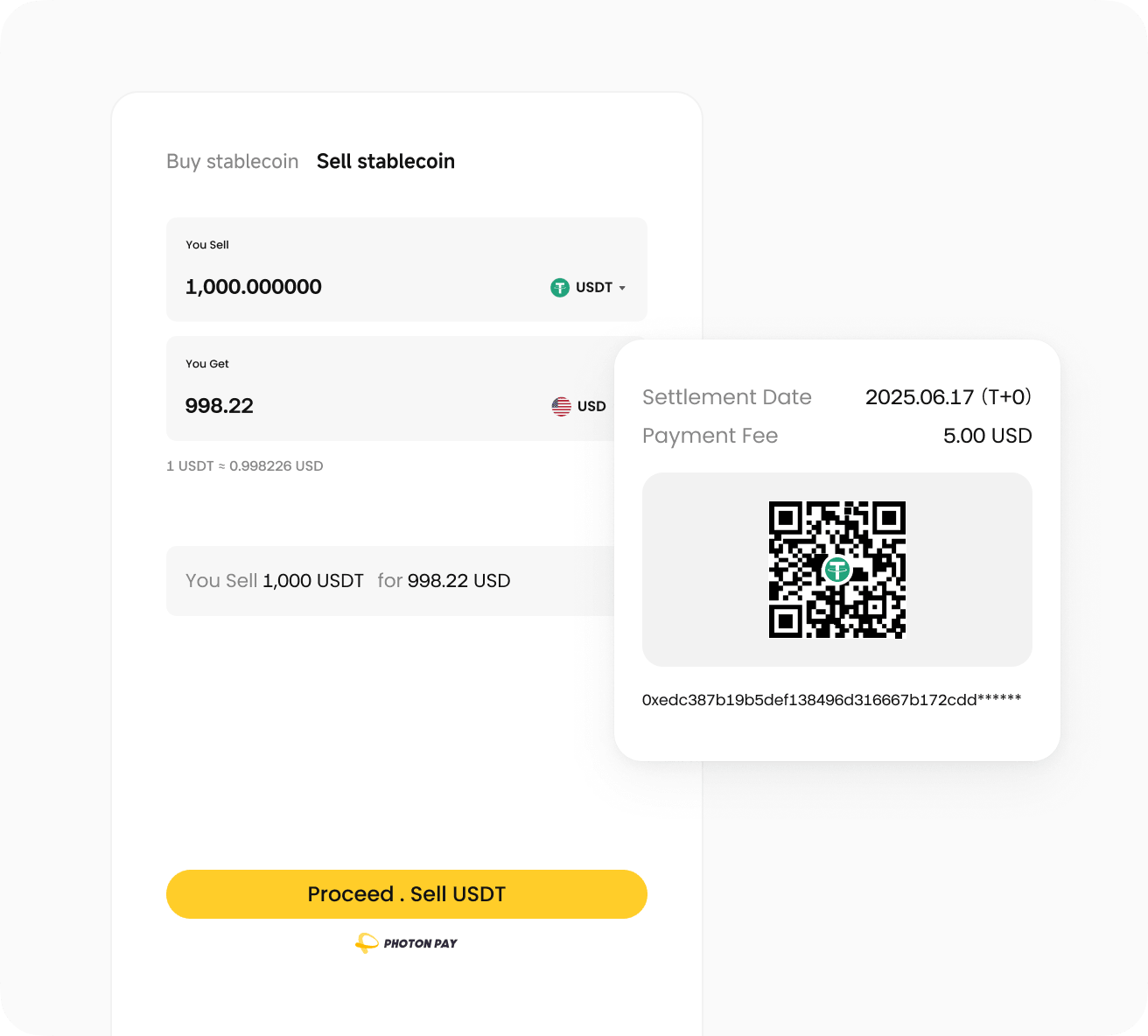
When a customer initiates a payment, the SDK handles the heavy lifting: it detects the user's preferred wallet, estimates gas fees, and executes the transaction in the background. The user sees only a familiar "Pay" button. This reduction in cognitive load and technical steps directly correlates with higher completion rates. According to Stripe's analysis of stablecoin trends for businesses, the ability to process payments with the reliability of traditional card networks while maintaining the speed of crypto settlements is driving significant adoption among e-commerce platforms.
This "one-click" capability transforms stablecoins from a niche speculative asset into a viable primary currency for daily commerce. By removing the barrier of wallet management, merchants can offer USDC payments to a broader audience without sacrificing the security or speed benefits of blockchain technology.
The technical implementation relies on smart contract interfaces that standardize these interactions across different wallets and chains. This standardization ensures that the checkout flow remains consistent regardless of whether the user is on MetaMask, Coinbase Wallet, or a mobile-native crypto app. For high-volume merchants, this consistency is essential for maintaining brand trust and reducing support tickets related to failed transactions.
Choosing the right USDC checkout solution
Stablecoin Checkout SDK works best as a clear sequence: define the constraint, compare the realistic options, test the tradeoff, and choose the path with the fewest hidden costs. That order keeps the advice usable instead of decorative. After each step, pause long enough to check whether the recommendation still fits the reader's actual situation. If it depends on perfect timing, unusual access, or a best-case budget, include a simpler fallback.
No comments yet. Be the first to share your thoughts!