
Why one-click stablecoin checkout matters now
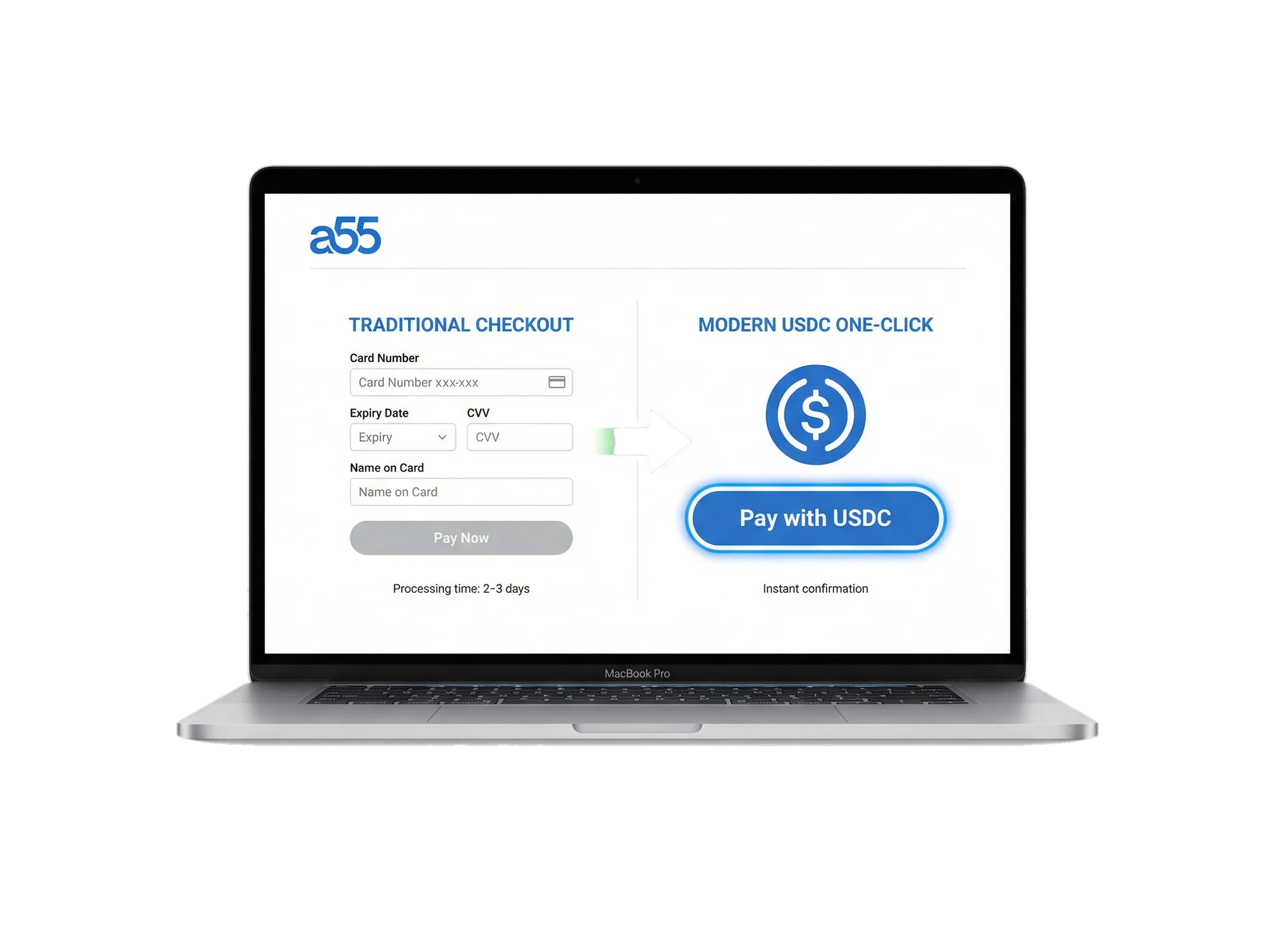
The barrier to stablecoin adoption isn't technology; it's the checkout experience. While the underlying blockchain infrastructure is mature, the friction of manual wallet transfers remains a significant hurdle for mainstream merchants. As noted by PYMNTS, the industry's next challenge is making crypto payments as seamless and trusted as traditional digital payments through one-tap checkout solutions. Without this shift, stablecoins remain a niche tool rather than a practical payment method for everyday commerce.
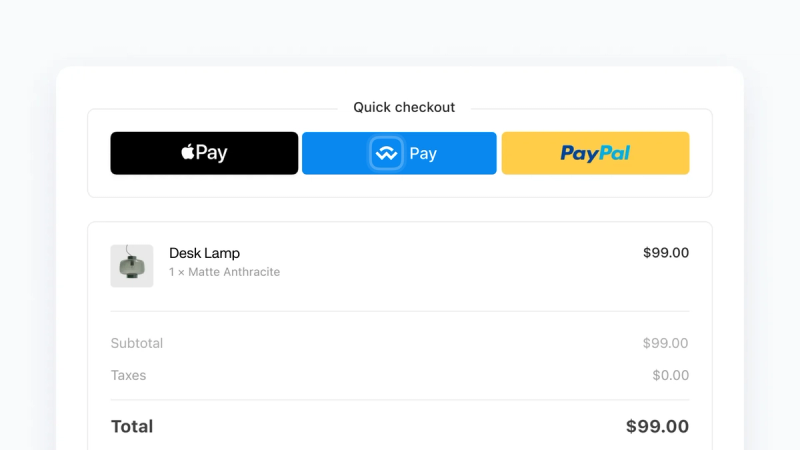
One-click stablecoin checkout addresses this by automating the complex steps of wallet connection, signature approval, and transaction broadcasting. Instead of navigating a digital wallet interface, customers complete a purchase with a single action, similar to using Apple Pay or Google Pay. This reduction in friction directly translates to higher conversion rates and lower cart abandonment, particularly for cross-border transactions where traditional banking rails are slow and expensive.
The economic rationale is clear. By bypassing traditional card networks, merchants can significantly reduce processing fees, which often range from 1.5% to 3.5% plus fixed costs. Stablecoin transactions settle in seconds, not days, improving cash flow and reducing the need for working capital reserves. For merchants operating globally, this means accessing a borderless customer base without the currency conversion delays and foreign exchange fees associated with international card payments.
Adopting one-click stablecoin checkout positions merchants ahead of the curve as digital payments evolve. It offers a faster, cheaper, and more efficient way to accept payments, particularly for high-volume or international sales. As the technology matures and consumer familiarity grows, early adopters will gain a competitive advantage in speed, cost, and global reach.
Top one-click stablecoin checkout providers
Choosing the right infrastructure for one-click stablecoin checkout depends on your merchant profile, technical stack, and settlement needs. The market has shifted from experimental pilots to integrated solutions that sit alongside traditional payment rails. Below, we compare the leading providers enabling merchants to accept stablecoins with minimal friction.
Comparison of Leading Providers
The table below highlights the distinct approaches of major providers. Some focus on enterprise-grade compliance, while others prioritize developer speed and multi-chain liquidity.
| Provider | Target Merchant | Settlement | Key Chains | Integration Style |
|---|---|---|---|---|
| Checkout.com | Enterprise | Fiat (via Coinbase) | Multi-chain | API/SDK |
| BVNK | Mid-Market | Fiat | EVM/L2 | One-Click SDK |
| Eco | Developers | Stablecoin/Fiat | Multi-chain | API/Liquidity |
| Polygon Pay | Global/High-Volume | USDC | Polygon | Direct API |
Checkout.com: Enterprise Compliance
Checkout.com has partnered with Coinbase to bring stablecoin acceptance to its enterprise merchant base. This integration allows large retailers to accept stablecoins while receiving fiat settlement, effectively removing volatility risk from the merchant's balance sheet. It is best suited for established businesses that require robust compliance and existing relationships with major payment processors.
BVNK: One-Click Simplicity
BVNK focuses on reducing integration time. Their "Let’s Go" platform allows merchants to add stablecoin payments to existing checkout flows with minimal code changes. By abstracting the complexity of wallet connections and gas fees, BVNK targets mid-market merchants who want to offer crypto options without building custom infrastructure. Settlement is typically handled in fiat, simplifying accounting.
Eco: Liquidity and Developer Focus
Eco provides a suite of products, including "Routes" and "Accounts," designed for developers who need deep liquidity access. Rather than just a checkout button, Eco offers the underlying plumbing to move stablecoins across chains instantly. This is ideal for tech-forward merchants or platforms that need to manage liquidity across multiple networks or offer native stablecoin settlement.
Polygon Pay: Speed and Low Fees
Polygon Pay leverages the Polygon network to offer near-instant settlement with transaction fees that are fractions of a cent. By focusing on USDC on Polygon, it provides a high-throughput solution for global merchants. This approach is particularly effective for micro-transactions or high-volume, low-margin businesses where traditional credit card fees and settlement times are prohibitive.
Technical requirements for stablecoin integration
One-Click Stablecoin Checkout works best as a clear sequence: define the constraint, compare the realistic options, test the tradeoff, and choose the path with the fewest hidden costs. That order keeps the advice usable instead of decorative. After each step, pause long enough to check whether the recommendation still fits the reader's actual situation. If it depends on perfect timing, unusual access, or a best-case budget, include a simpler fallback.
Merchant adoption and institutional signals
The momentum behind one-click stablecoin checkout is no longer theoretical. Major payment processors are embedding stablecoin rails directly into the infrastructure that merchants already use. This shift signals that financial institutions view stablecoins not as a speculative asset, but as a settlement layer for everyday commerce.
In July 2026, Checkout.com announced a partnership with Coinbase to enable stablecoin acceptance for enterprise merchants. By integrating with Coinbase Commerce, Checkout.com allows eligible merchants to accept payments in stablecoins while settling in fiat. This approach bridges the gap between crypto-native settlement and traditional accounting, reducing the friction that previously deterred large-scale adoption.
The hardware layer is catching up. Ingenico and WalletConnect recently brought native stablecoin checkout to 40 million payment terminals. This expansion moves stablecoin payments beyond online wallets and into physical point-of-sale environments, where consumers can pay with a tap or scan just like a credit card.
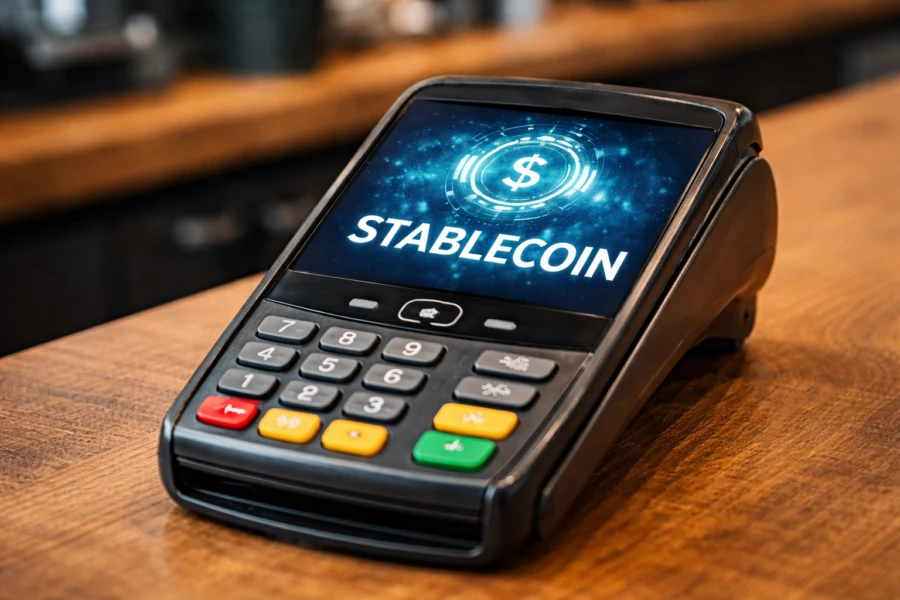
The Bank for International Settlements (BIS) notes that 99.4% of stablecoins by value are tied to the dollar, providing the stability merchants need for pricing and reconciliation. As payment networks and terminal manufacturers standardize these protocols, the one-click stablecoin checkout experience is becoming indistinguishable from traditional card payments.
Frequently asked questions about stablecoin checkout
Stablecoin payments are moving from experimental to everyday utility. This section addresses the most common questions merchants and consumers ask about integrating stablecoin checkout, including how the payments work, the nature of the assets, and the process for cashing out.
No comments yet. Be the first to share your thoughts!