
One-click stablecoin checkout: what it actually does
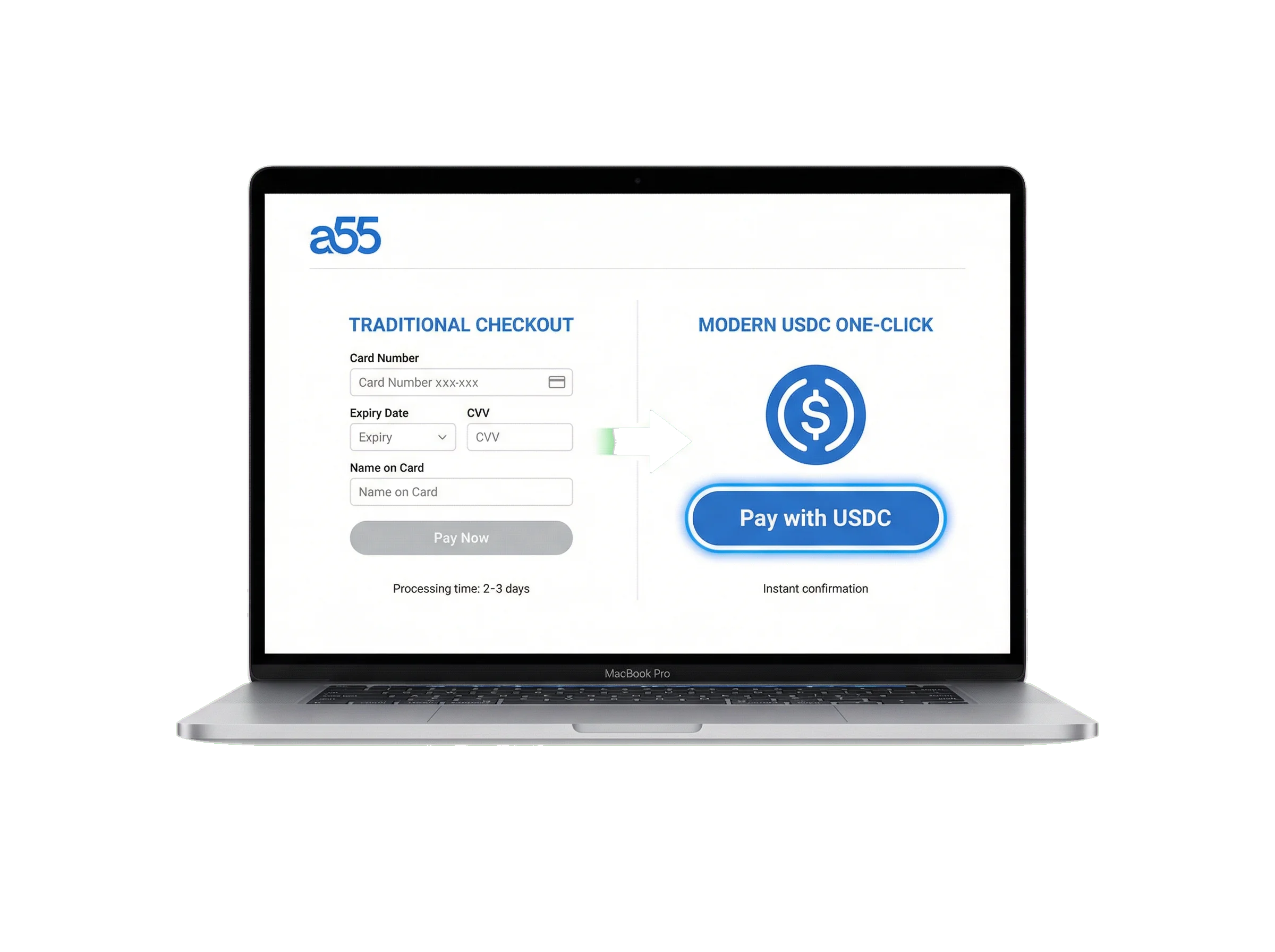
One-click stablecoin checkout removes the friction from crypto payments by letting a customer pay with a single tap instead of managing wallets, gas fees, or manual transfers. The SDK handles the transaction logic, so the merchant sees a standard payment confirmation while the blockchain settles in the background.
This approach unifies fiat and regulated stablecoins on a single checkout interface. Providers like Volt build unified merchant treasury solutions alongside the checkout experience, ensuring that revenue isn't lost to volatility or complex settlement steps. The result is a payment flow that feels like credit card processing but settles in near real time via smart contracts.
Stablecoin payments are fast, secure, and programmable. They automate reconciliation and reduce chargeback risk, but they require careful integration to handle compliance and network fees. Merchants must choose SDKs that support the specific stablecoins their customers hold, such as USDC or USDT, to ensure broad adoption.
One-click stablecoin checkout choices that change the plan
Integrating a one-click stablecoin SDK replaces the friction of manual wallet interactions with a streamlined checkout experience, but it introduces specific architectural and financial tradeoffs. The decision rarely comes down to "crypto vs. fiat"; it is about selecting the right settlement layer for your margin structure and compliance requirements.
When evaluating providers like Volt, Checkout.com, or Eco, you must weigh the speed of near-real-time settlement against the complexity of treasury management. While stablecoins settle in seconds, the conversion to fiat for tax reporting or operational expenses can create liquidity gaps if not managed correctly. Below is a comparison of the primary tradeoffs to consider.
| Feature | Cost Structure | Settlement | Compliance Load |
|---|
Network and Gas Volatility
Even when using gasless transaction models, the underlying blockchain network can experience congestion during high-volume periods. This affects the user experience and the final cost of the transaction. Providers that abstract this complexity (like Eco) offer a smoother checkout but may charge a premium for that abstraction. If you build directly on-chain, you must implement dynamic fee estimation to prevent failed transactions due to insufficient gas.
Fiat Conversion and Treasury Risk
The most significant tradeoff is the timing of fiat conversion. If your SDK settles in USDC but your vendors require USD, you are exposed to stablecoin de-pegging risks and regulatory scrutiny regarding money transmission licenses. Aggregators like Checkout.com mitigate this by instantly converting crypto to fiat, but they take a larger cut. Native SDKs preserve margins but require you to manage the treasury bridge yourself.
Compliance and KYC Burden
One-click checkouts often require identity verification to comply with anti-money laundering (AML) laws. If the provider is non-custodial, the compliance burden shifts to you; if they are custodial, they handle it for a fee. For enterprise merchants, the latter is often preferred to avoid the legal overhead of becoming a money services business (MSB).
Choose the next step
2026 guide: Integrating One-Click Stablecoin Checkout SDKs for Seamless Web3 Payments works best as a clear sequence: define the constraint, compare the realistic options, test the tradeoff, and choose the path with the fewest hidden costs. That order keeps the advice usable instead of decorative. After each step, pause long enough to check whether the recommendation still fits the reader's actual situation. If it depends on perfect timing, unusual access, or a best-case budget, include a simpler fallback.
Avoid Weak Options and Misleading Claims
Integrating a one-click stablecoin checkout SDK sounds simple until you hit the gaps between marketing promises and actual merchant operations. Many providers advertise "seamless" experiences while hiding critical friction points in treasury management or regulatory compliance. Before committing to an SDK, audit the integration against these common pitfalls.
Vague "Unified Treasury" Claims
Some checkout providers, like Volt, market unified fiat and stablecoin solutions alongside treasury management. While attractive, these bundled offerings often lack transparency on how funds are settled or where they are held. If the SDK promises to handle your treasury but doesn't clearly document the custody layer or settlement finality, you risk exposing your business to liquidity risks. Always demand a whitepaper or technical specification that details the flow of funds from wallet to bank account.
Ignoring Regulatory Nuances
Not all stablecoins are created equal in the eyes of regulators. A provider might accept USDC without issue but flag USDT due to compliance concerns, or vice versa. Weak options often fail to provide granular control over which assets are accepted. If your SDK forces you to accept a specific stablecoin or cannot filter by asset type, you are building on shaky ground. Ensure the SDK allows you to configure accepted assets based on your jurisdiction's requirements.
Hidden Settlement Delays
"Near real-time" settlement is a common claim, but it rarely applies to the merchant's bank account. Many SDKs settle to a crypto wallet instantly but take days to clear fiat. If your business relies on cash flow, this delay can be devastating. Look for SDKs that offer instant fiat payouts or clearly state the settlement timeline for each supported currency. Without this clarity, you are effectively offering your customers a loan to the payment processor.
One-click stablecoin checkout: what to check next
Stablecoin integration brings speed and lower fees, but it also introduces new technical and regulatory considerations for merchants and buyers. These answers address the most common practical objections and clarifications before you commit to a one-click checkout SDK.
Who is the payment provider for stablecoin?
Stablecoin transactions are processed through specialized payment gateways that bridge blockchain networks with traditional merchant accounts. Providers like Checkout.com partner with crypto infrastructure firms such as Coinbase to offer enterprise-grade stablecoin acceptance. Other options include Volt, which unifies fiat and regulated stablecoins on a single checkout, and Polygon Payments, which focuses on instant settlement with near-zero fees. These providers handle the conversion, compliance, and settlement, allowing merchants to receive fiat currency while customers pay in digital assets.
Is Trump a stablecoin?
No, Trump is not a stablecoin. The name refers to a category of meme coins or political-themed cryptocurrencies that have appeared on various blockchain networks. Unlike true stablecoins, which are pegged to real-world assets like the US dollar to maintain a stable price, these political tokens are highly volatile and speculative. They do not offer the price stability required for reliable commerce or one-click checkout integrations.
Does Walmart have its own stablecoin?
Walmart has not launched its own stablecoin for public use. In 2019, the retailer filed a patent for a USD-backed digital currency intended for internal settlement, supply chain payments, and employee payroll. While this demonstrates Walmart's interest in blockchain technology for backend efficiency, there is no public-facing Walmart stablecoin available for consumer purchases or merchant integration today.
How to cash out stablecoins?
Cashing out stablecoins involves transferring them from your digital wallet to a centralized exchange like Coinbase, Binance, or Kraken. Once the stablecoins are deposited and verified, you can sell them for fiat currency such as USD or EUR. The fiat funds can then be withdrawn to your linked bank account via ACH, wire transfer, or SEPA, depending on your region. Many merchants use automated SDKs that handle this conversion instantly at the point of sale, eliminating the need for manual cashing out.
No comments yet. Be the first to share your thoughts!