
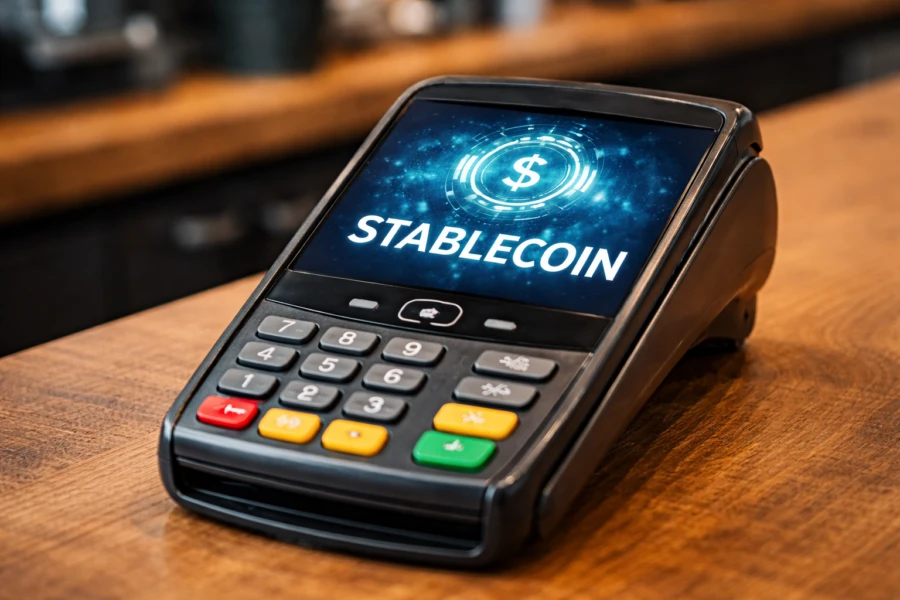
The Shift to One-Click Stablecoin Checkout
The friction of traditional cryptocurrency payments has long been a barrier to mainstream adoption. For years, merchants and consumers have faced a cumbersome process: connecting a wallet, confirming transaction hashes, and waiting for blockchain confirmations. This manual workflow is incompatible with the speed expectations of modern e-commerce. The industry is now pivoting toward one-click stablecoin checkout, a model that abstracts away the complexity of blockchain interaction behind familiar, seamless payment interfaces.
This transition is not merely a technological upgrade but a structural shift in how digital payments are processed. The primary driver is the need for enterprise-grade reliability. Manual wallet connections are prone to user error and security vulnerabilities. By integrating SDKs that handle the cryptographic signing and transaction broadcasting in the background, merchants can offer crypto payments that feel identical to using a credit card. This abstraction is critical for capturing the growing demand for digital asset payments without alienating non-technical users.
The industry's next challenge is making crypto payments as seamless and trusted as traditional digital payments through one-tap checkout. (Pymnts)
Enterprise partnerships are accelerating this shift. Major payment processors are moving beyond experimental pilots to integrate stablecoin acceptance directly into their existing infrastructure. For instance, Checkout.com has partnered with Coinbase to enable eligible enterprise merchants to accept stablecoin payments. This collaboration signals a move toward institutional-grade solutions that prioritize compliance, settlement speed, and ease of integration.
The result is a market where the technology becomes invisible. Consumers pay in stablecoins, but the merchant experiences the transaction as a standard fiat settlement. This one-click stablecoin checkout model reduces cart abandonment and opens up global markets, as stablecoins bypass the delays and fees of cross-border bank transfers. The focus is no longer on the underlying blockchain technology, but on the frictionless user experience it enables.
Leading SDKs for one-click stablecoin checkout
The infrastructure for one-click stablecoin checkout has matured from experimental prototypes to production-ready APIs. For finance market operators, the choice of SDK dictates not just the user experience, but the speed of capital settlement and regulatory compliance. Three providers currently dominate the landscape: Checkout.com, Crossmint, and AllScale.
Each offers a distinct approach to integrating crypto payments into existing merchant workflows. The following comparison evaluates these platforms based on integration complexity, supported token standards, and target merchant scale. This analysis focuses on the technical realities of deploying a one-click stablecoin checkout solution in a high-stakes financial environment.
| Provider | Integration Time | Primary Tokens | Target Merchant |
|---|---|---|---|
| Checkout.com | Enterprise Onboarding | USDC, USDT, EURC | Large Enterprise |
| Crossmint | ~10 Minutes | USDC, USDT, ETH | Web3 Native / SMB |
| AllScale | API-First SDK | USDC, USDT | Ecommerce / SMB |
Checkout.com has positioned itself as the bridge between traditional finance and digital assets. Their stablecoin acceptance solution, developed in partnership with Coinbase, is designed for eligible enterprise merchants. This partnership allows large-scale retailers to accept stablecoin payments from consumers, capturing global demand without disrupting legacy fiat settlement pipelines. The integration is not a simple drop-in SDK; it requires enterprise-level onboarding and compliance checks, reflecting their focus on high-volume, regulated commerce. For merchants already using Checkout.com’s fiat rails, this creates a unified treasury management experience.
Crossmint takes a radically different approach by prioritizing speed and accessibility for Web3-native experiences. Their Digital Asset Checkout API promises a ten-minute integration, allowing merchants to accept credit card payments and cross-chain transactions without requiring the user to hold a crypto wallet initially. This "on-ramp" model is ideal for SMBs and platforms looking to abstract away the complexity of blockchain interactions. While it supports major stablecoins like USDC and USDT, its core value proposition lies in lowering the barrier to entry for users who are not yet crypto-curious.
AllScale focuses exclusively on the stablecoin-native payment layer for ecommerce. Their SDK is built to let online businesses accept payments directly in USDC and USDT, treating crypto as a first-class currency rather than a speculative asset. AllScale’s architecture is designed for developers who want granular control over the checkout flow, offering an API-first approach that integrates with existing ecommerce platforms. This makes them a strong candidate for merchants who want to retain customer data and payment records on-chain while offering the speed of one-click stablecoin checkout.
Integration complexity and developer experience
Achieving a true one-click stablecoin checkout requires navigating a spectrum of integration complexities. On one end, providers like Crossmint offer streamlined APIs designed for rapid deployment, allowing merchants to accept digital assets with credit cards in approximately ten minutes without requiring users to hold a crypto wallet. This approach abstracts away the blockchain layer, presenting a familiar checkout flow that minimizes friction for the consumer.
Conversely, enterprise-grade solutions often demand deeper technical commitments. Integrating directly with payment processors like Checkout.com or building custom wallet-on-ramp flows involves managing complex API endpoints, handling cross-chain liquidity, and ensuring strict compliance with financial regulations. These implementations require significant engineering resources to maintain security and uptime, making them suitable for large-scale operations but potentially prohibitive for smaller teams.
The choice between speed and control defines the developer experience. While rapid integrations reduce time-to-market, they may limit customization options. Developers must weigh the immediate benefits of a quick setup against the long-term flexibility required to scale the one-click stablecoin checkout infrastructure as transaction volumes grow.
Market Context: Volatility and Stability
The core value proposition of one-click stablecoin checkout lies in its ability to insulate merchants from the extreme volatility that characterizes broader crypto markets. While Bitcoin and Ethereum prices fluctuate wildly, stablecoins like USDC and USDT are pegged to fiat currencies, offering the speed of blockchain with the predictability of traditional currency. This stability is what allows enterprise merchants to accept crypto without immediately converting it back to dollars, effectively neutralizing the risk of price swings during the transaction window.
To understand why this matters, consider the price behavior of the assets themselves. A merchant processing payments needs assurance that the asset they receive is not losing value seconds after the customer clicks "pay." The following chart illustrates the tight correlation between USDC and the US Dollar, highlighting the minimal deviation that makes it a viable medium of exchange for retail.
This stability is not inherent to all digital assets, which is why the infrastructure behind the checkout matters. Partnerships like the one between Checkout.com and Coinbase enable eligible enterprise merchants to accept stablecoin payments directly, bridging the gap between consumer crypto holdings and merchant fiat settlements. Similarly, Crossmint’s Digital Asset Checkout API allows users to buy digital assets with credit cards, further integrating traditional payment rails with crypto liquidity. These integrations ensure that the "one-click" experience feels as seamless as a credit card swipe, removing the friction that has historically slowed adoption.
The industry’s next challenge is not technological but behavioral: making crypto payments as trusted and seamless as traditional digital payments. As noted in recent analyses, stablecoins have a checkout problem, not a tech problem. The technology to process these transactions exists; the hurdle is creating a user experience that feels instant, secure, and familiar. By leveraging SDKs that handle the complexity of wallet connections and gas fees, merchants can offer a one-click stablecoin checkout that meets this high standard.
No comments yet. Be the first to share your thoughts!