
The shift to programmable money
The narrative around cryptocurrency is undergoing a quiet but decisive correction. For years, digital assets were defined by speculation, volatility, and the friction of manual wallet management. Today, the focus has shifted toward utility, with stablecoins emerging as the functional layer of e-commerce. This is not about betting on price movements; it is about using money that moves as fast as information.
Stablecoins are cryptocurrencies pegged to stable assets, typically fiat currencies like the US dollar. This peg eliminates the wild swings that make traditional cryptocurrencies unsuitable for everyday transactions. Instead of waiting for bank transfers to clear over days, merchants can settle payments in minutes, often for a fraction of the cost. The technology transforms money from a static store of value into a programmable tool that executes automatically at the point of sale.
This shift is driven by the need for efficiency in global trade. Traditional payment rails are slow and expensive, especially for cross-border transactions. Stablecoins bypass these intermediaries. They allow businesses to hold global balances and execute single-click, gasless transactions. For the merchant, this means reduced chargebacks and immediate liquidity. For the consumer, it means a checkout experience that feels as simple as clicking a button, but settles with the finality of blockchain.
The stability of these assets is critical for their adoption. Unlike Bitcoin or Ethereum, which can fluctuate significantly in value, stablecoins maintain a consistent peg. This predictability allows businesses to price goods in local currency while settling in digital dollars, removing the risk of holding volatile assets on their balance sheets. As regulatory frameworks mature, this utility is becoming the primary driver for enterprise adoption.
The chart above illustrates the stability of USDC, a leading regulated stablecoin. Notice how the price remains tightly anchored to the $1.00 mark, contrasting sharply with the volatility seen in broader crypto markets. This consistency is what makes stablecoins viable for high-volume e-commerce, where margin protection and predictable cash flow are non-negotiable.
As we move into 2026, the integration of these assets into mainstream checkout flows is no longer experimental. It is becoming the standard for digital commerce. The technology is ready, the regulatory environment is clarifying, and the consumer demand for faster, cheaper payments is undeniable. The shift to programmable money is here, and it is changing how we think about every transaction.
How one-click stablecoin checkout works
The shift from manual crypto transfers to one-click stablecoin checkout relies on abstracting blockchain complexity behind familiar e-commerce interfaces. Instead of asking customers to manage private keys, paste wallet addresses, or confirm multiple gas fees, checkout SDKs handle the heavy lifting in the background. This approach turns a volatile, technical process into a predictable transaction flow that mirrors traditional credit card payments.
At the core of this mechanism is the use of account abstraction or sponsored transaction models. When a shopper clicks "Pay," the merchant’s SDK initiates a transaction on the blockchain. Rather than the customer paying for gas in the native token (like ETH or SOL), the merchant or a payment processor covers these fees. This "gasless" experience removes the primary friction point that has historically prevented mainstream adoption of digital currency payments.
The technical orchestration happens through specialized SDKs that bridge the gap between your storefront and the blockchain. These tools generate unique deposit addresses for users, monitor for incoming payments, and automatically confirm the order status once the transaction is finalized on-chain. Providers like Eco have built networks specifically to support this model, offering single-click gasless transactions that allow merchants to offer global stablecoin balances without managing complex wallet infrastructure.
The customer selects stablecoin as their payment method. The SDK injects a lightweight payment widget into the checkout flow, similar to how Apple Pay or PayPal buttons appear today. This step requires no prior wallet setup from the user if the provider supports custodial or social login options.
Behind the scenes, the system creates a unique deposit address or payment request linked to the specific order ID. This ensures that when the funds arrive, they can be instantly reconciled with the customer’s cart. The SDK handles the routing, ensuring the stablecoin (USDC, USDT, etc.) is sent to the correct merchant wallet on the chosen blockchain network.
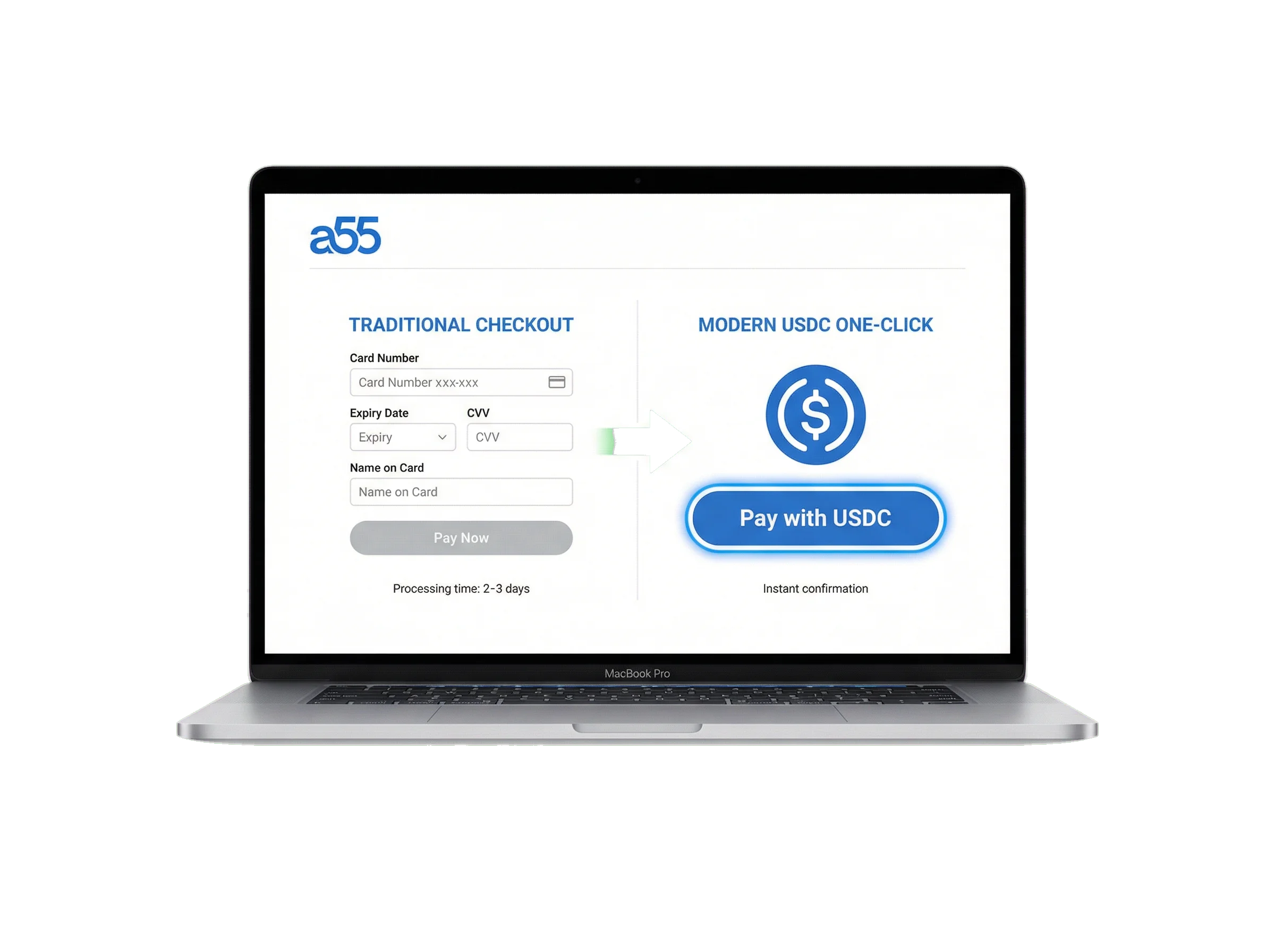
The customer confirms the payment. The SDK submits the transaction to the blockchain, but the gas fee is sponsored by the merchant or payment processor. This means the customer sees a simple "Confirm" button rather than a prompt to swap tokens for gas. The transaction is signed and broadcasted without requiring the user to hold the native chain token.
The SDK monitors the mempool and blockchain for confirmation. Once the transaction is included in a block (often within seconds on layer-2 networks), the SDK triggers an instant webhook to your backend. The order status updates to "Paid," and fulfillment begins immediately, eliminating the waiting periods associated with traditional bank settlements.
This architecture solves the "checkout problem" not by changing the underlying blockchain technology, but by hiding it. As noted in industry analysis, stablecoins face a UX challenge rather than a tech one; the infrastructure for instant settlement already exists. By wrapping this infrastructure in a one-click SDK, merchants can offer the speed of crypto with the simplicity of fiat.
Leading SDK providers in 2026
Use this section to make the One-Click Stablecoin Checkout decision easier to compare in real life, not just on paper. Start with the reader's actual constraint, then separate must-have requirements from details that are merely nice to have. A practical choice should survive normal use, maintenance, timing, and budget. If a recommendation only works in an ideal situation, call that out plainly and give the reader a fallback path.
| Factor | What to check | Why it matters |
|---|---|---|
| Fit | Match the option to the primary use case. | A good deal still fails if it does not fit the job. |
| Condition | Verify age, wear, and service history. | Hidden condition issues erase upfront savings. |
| Cost | Compare purchase price with likely upkeep. | The cheapest option is not always the lowest-cost option. |
The regulatory reality
Stablecoin integration is no longer just a technical feat; it is a compliance imperative. For merchants, the shift from experimental crypto to one-click checkout requires navigating a patchwork of global regulations. Ignoring these frameworks invites operational risk, from frozen assets to regulatory penalties. The market is moving from a wild west phase to a structured, rule-based environment.
In the United States, the GENIUS Act sets a federal baseline for stablecoin issuers, emphasizing reserve transparency and consumer protection. This legislation clarifies that not all digital dollars are equal, forcing merchants to vet their payment providers carefully. Issuers must hold high-quality liquid assets to back every token in circulation, reducing the risk of de-pegging events that could disrupt checkout flows.
Meanwhile, the European Union’s Markets in Crypto-Assets (MiCA) regulation provides a comprehensive framework for crypto-service providers. MiCA mandates strict licensing and operational standards for any entity facilitating stablecoin transactions within the bloc. For e-commerce businesses operating cross-border, this means adhering to distinct compliance protocols depending on the customer’s location. The result is a more predictable, albeit complex, regulatory landscape that favors established, audited stablecoins over speculative alternatives.
Merchants must treat compliance as a core feature of their checkout infrastructure. This involves selecting payment partners who are actively engaged with regulators and can provide necessary transaction reporting. Failure to align with these evolving standards can stall adoption and expose the business to unnecessary legal liability.
Integrate one-click stablecoin checkout
Adding stablecoin acceptance to your store requires a payment gateway that handles the blockchain conversion. Providers like Checkout.com and Eco allow merchants to settle in USDC while customers pay with various stablecoins. This integration turns volatile crypto assets into predictable fiat revenue.
The process typically involves three steps. First, connect your existing e-commerce platform to a stablecoin-enabled payment processor. Second, configure your preferred settlement currency, usually a fiat dollar equivalent or a specific stablecoin like USDC. Third, test the transaction flow to ensure the one-click experience works smoothly for your global customers.
Most gateways handle the complex blockchain interactions behind the scenes. You simply update your API keys and enable the stablecoin option in your dashboard. This approach minimizes technical overhead while expanding your payment options for international buyers who prefer digital assets.
No comments yet. Be the first to share your thoughts!