
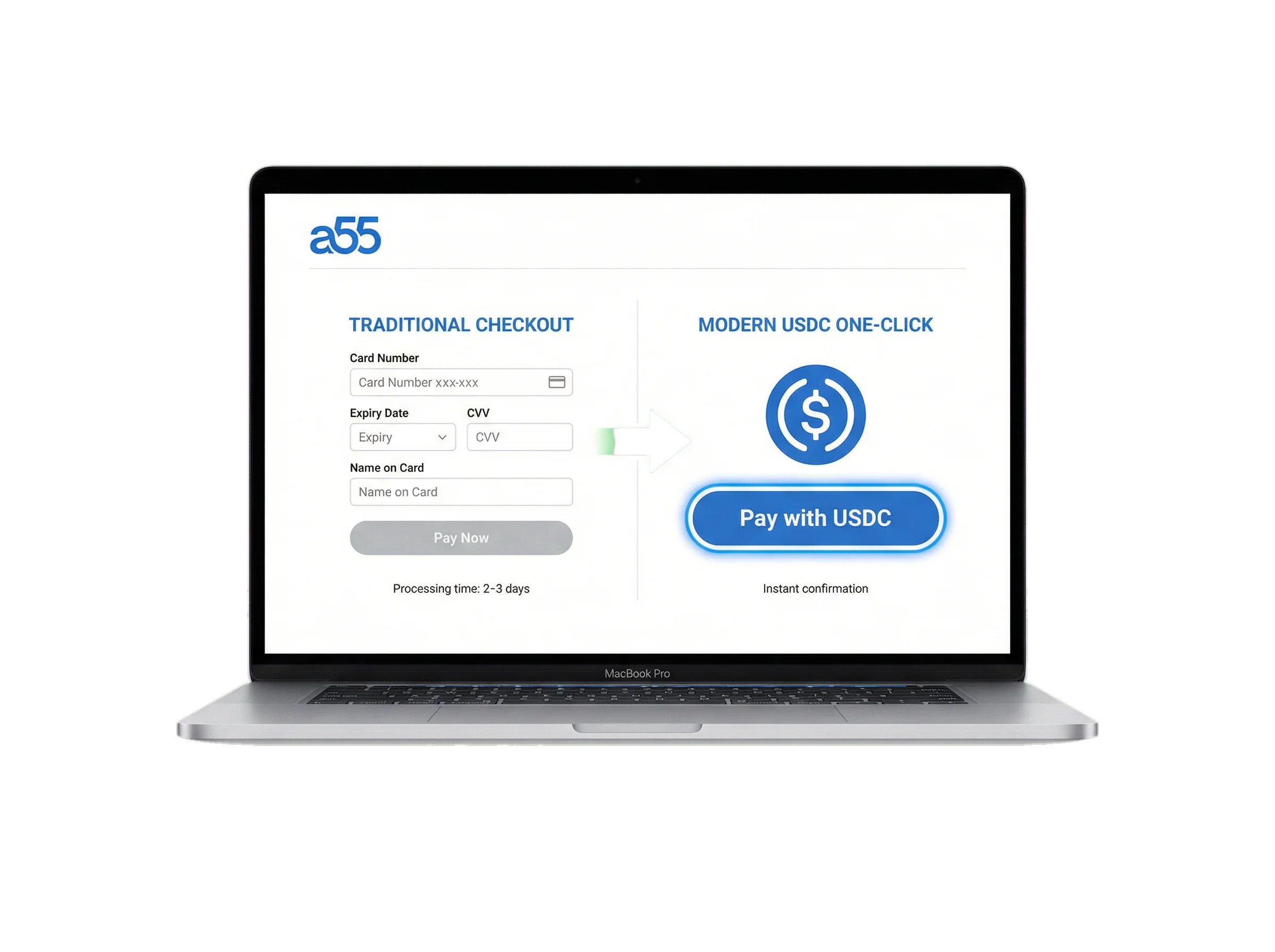
The reality of one-click stablecoin checkout
One-click stablecoin checkout sounds like the final step toward frictionless Web3 payments, but the current infrastructure is still maturing. While the user experience promises a simple tap-to-pay flow, the backend requires careful handling of blockchain confirmations, wallet signatures, and regulatory compliance. Merchants cannot simply plug in a generic crypto wallet; they need specialized SDKs that abstract away the complexity of bridging fiat and regulated stablecoins on a single, secure checkout interface [src-serp-1].
The term "one-click" is often used loosely in marketing materials. In practice, it means the merchant has pre-approved the payment flow, but the customer still needs to authorize the transaction from their wallet. This authorization can happen via deep links, QR codes, or in-app wallet extensions. The speed of the transaction depends heavily on the underlying blockchain. Ethereum mainnet can take minutes during peak times, while layer-2 solutions or stablecoins on faster chains like Solana or Polygon can settle in seconds.
Security and fraud prevention are the biggest hurdles. Unlike credit cards, blockchain transactions are irreversible. If a customer sends the wrong token or falls victim to a phishing scam, there is no chargeback mechanism. Therefore, a robust one-click checkout SDK must include real-time risk scoring, address verification, and stablecoin validation to ensure the currency received matches the price displayed. Without these safeguards, the "seamless" experience becomes a liability for both the merchant and the consumer.
One-click stablecoin checkout choices that change the plan
Choosing a stablecoin checkout SDK requires balancing merchant liability, user friction, and regulatory compliance. While the promise of "seamless" payments is appealing, the underlying mechanics vary significantly between providers. Merchants must evaluate how each SDK handles the transition from digital asset to settled fiat, as this determines where the risk—and the responsibility—falls.
Regulatory Compliance and Liability
The most critical factor is whether the SDK or its partner acts as a Money Services Business (MSB). Providers like Checkout.com, in partnership with Coinbase, handle the regulatory heavy lifting for eligible enterprise merchants, absorbing the compliance burden. In contrast, some newer entrants may require the merchant to maintain their own compliance infrastructure. If the SDK does not handle KYC/AML checks at the point of sale, your legal team will need to manage the fallout of any regulatory scrutiny.
Settlement Speed and Treasury Management
Settlement determines when you actually have access to your funds. Traditional credit card processors hold funds for days; stablecoin SDKs can settle in minutes. However, you must decide if you want settlement in fiat or stablecoin. Volt, for instance, unifies fiat and regulated stablecoins on a single checkout while building a unified merchant treasury solution. This allows businesses to hold stablecoin reserves for operational efficiency while still offering the familiarity of fiat settlement to customers who prefer it.
User Friction and Gas Abstraction
The "one-click" promise only works if the user experience is truly frictionless. If a customer must manually sign a transaction or pay network gas fees, conversion rates drop. Solutions like Eco focus on "gasless transactions," allowing users to pay with stablecoins without managing private keys or network fees directly. This abstraction is vital for mainstream adoption, turning a complex crypto interaction into a simple tap-to-pay experience similar to Apple Pay.
Supported Chains and Interoperability
Not all stablecoins are created equal, and not all SDKs support the same networks. A robust integration must support major chains like Ethereum, Solana, and Polygon, along with their respective stablecoins (USDC, USDT, DAI). Ensure the SDK you choose can handle cross-chain transactions if your customer base is global. Fragmentation across multiple chains can lead to liquidity issues and increased transaction costs if the SDK does not route payments through the most efficient network automatically.
| Provider | Settlement | Gas Handling | Compliance Role |
|---|---|---|---|
| Checkout.com | Fiat (via Coinbase) | Provider Absorbed | Provider Managed |
| Volt | Fiat or Stablecoin | Provider Managed | Unified Treasury |
| Eco | Stablecoin | Gasless (Abstracted) | User/Platform Shared |
How to choose a stablecoin checkout SDK
Selecting the right integration point for one-click stablecoin checkout requires balancing regulatory compliance, liquidity depth, and developer friction. Not every SDK handles the same asset classes or jurisdictions, and a mismatch here can lead to failed transactions or frozen funds. This framework helps you evaluate options based on four critical dimensions.
Regulatory scope and asset coverage
The first check is whether the SDK supports the specific stablecoins your audience holds and operates in your target markets. Some providers, like Volt, focus on unifying fiat and regulated stablecoins on a single secure checkout, which simplifies compliance but limits asset variety. Others may support a broader range of assets, including USDT or USDC across multiple chains, but require more complex risk management on your end. Ensure the provider is licensed in your jurisdiction to avoid legal bottlenecks.
Developer experience and integration speed
One-click checkout promises speed, but only if the SDK integrates cleanly into your existing stack. Look for providers that offer well-documented APIs, sandbox environments, and pre-built UI components. A SDK that requires extensive custom coding for basic wallet connections or transaction signing will negate the time savings of one-click functionality. Test the developer portal’s responsiveness and the clarity of their error handling before committing.
Transaction fees and settlement time
Stablecoin transactions are not free. Evaluate the total cost of ownership, including network gas fees, provider processing fees, and any hidden currency conversion costs. Some SDKs settle instantly on-chain but charge higher fees, while others use off-ramp solutions that are cheaper but slower. For a seamless user experience, settlement should be near-instant, but the cost impact on your margins must be calculated per transaction.
Risk management and fraud prevention
One-click payments reduce friction but can increase exposure to fraud if not properly guarded. The best SDKs include built-in risk scoring, address blacklisting, and transaction monitoring tools. These features are essential for high-stakes transactions to prevent chargebacks or irreversible losses due to user error or malicious activity. Verify that the provider offers real-time alerts and customizable thresholds for suspicious behavior.
Support and reliability
Finally, consider the provider’s track record for uptime and customer support. Stablecoin payments operate 24/7, and any downtime during peak hours can result in lost sales. Look for providers with SLAs (Service Level Agreements) and a history of rapid incident response. Check independent reviews and case studies to gauge real-world reliability.
Watch out for weak integration options
Not every SDK delivers on its promises. Some providers claim "one-click" simplicity while requiring complex wallet connections or exposing merchants to high volatility risk. Before committing to an integration, audit the following weak options that commonly undermine stablecoin checkout performance.
Hidden volatility exposure
Some SDKs advertise stablecoin support but fail to instantly convert payments to fiat or stable reserves. If the settlement window lags, merchants absorb price swings. Check whether the provider offers real-time conversion or holds stablecoin reserves during the checkout flow. Volt, for example, unifies fiat and regulated stablecoins on a single checkout to mitigate this risk [src-serp-1].
Regulatory blind spots
A common mistake is assuming all stablecoins are created equal. Some SDKs support assets that lack clear regulatory backing or reserve transparency. Always verify which stablecoins the SDK supports and whether they align with current regulatory standards. The regulatory landscape for stablecoins is evolving, and non-compliant assets can lead to frozen funds or legal issues [src-serp-2].
Poor user experience
True "one-click" checkout should not require users to navigate multiple screens or confirm transactions repeatedly. If the SDK forces users to copy-paste addresses or sign multiple transactions, it is not truly seamless. Test the flow with a real wallet to ensure the experience is as smooth as traditional credit card payments.
One-click stablecoin checkout: what to check next
Integrating a one-click stablecoin checkout SDK simplifies Web3 payments, but practical concerns remain. Below are direct answers to the most frequent objections regarding setup, asset types, and platform availability.
No comments yet. Be the first to share your thoughts!