
Get one-click stablecoin checkout SDK right
Before writing a single line of code, align your technical stack with the SDK’s requirements. One-click stablecoin checkout SDKs rely on specific backend capabilities to handle real-time settlement and currency conversion. Skipping these prerequisites leads to failed transactions and frustrated customers.
First, verify your payment gateway supports the stablecoins you intend to accept. Major providers like Stripe and Checkout.com have integrated stablecoin acceptance, but support varies by region and merchant tier. Ensure your account is eligible for crypto payments before attempting integration. Refer to official documentation from providers like Stripe or Checkout.com to confirm compatibility.
Next, prepare your backend for webhook-driven settlement. Unlike traditional credit card processing, stablecoin transactions are immutable and final. Your system must listen for on-chain confirmation events to update order status automatically. Implement robust error handling for network delays or chain reorganizations. This ensures your inventory and accounting systems reflect the true state of funds in real time.
Set up a one-click stablecoin checkout SDK
Integrating a stablecoin payment gateway reduces friction for crypto-native shoppers while protecting your margins from volatility. Unlike traditional card processing, stablecoin settlements are final and irreversible, which eliminates chargeback risk but requires precise technical setup. This section walks through the essential steps to deploy a one-click checkout experience using major providers like Stripe or Checkout.com.
1. Choose your settlement path
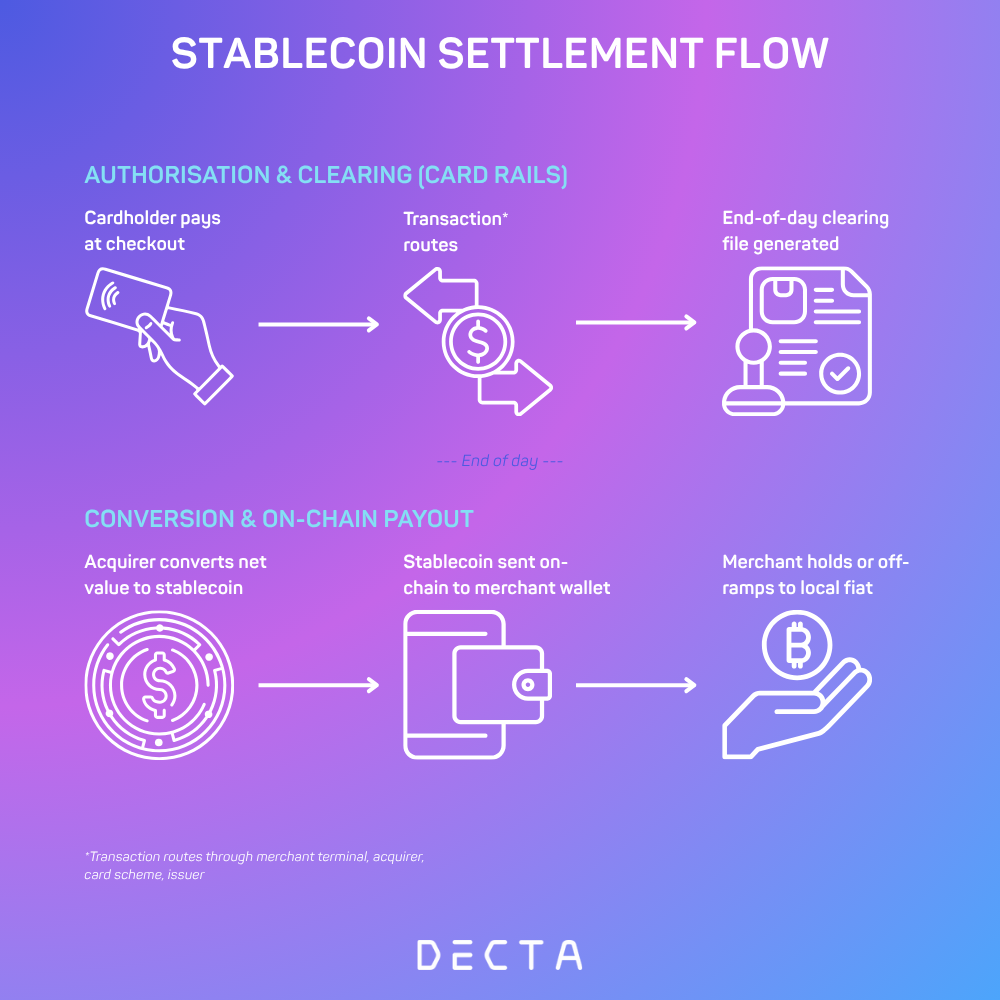
Before writing code, decide whether to hold stablecoins or convert them instantly. Most merchants prefer instant conversion to fiat to avoid balance sheet exposure. Stripe’s integration supports this by allowing you to accept USDC or USDT and settle in your local currency automatically. This approach simplifies accounting but may involve slightly higher processing fees than holding the asset. Check your provider’s documentation to confirm which stablecoins are supported in your region.
Start in a sandbox environment to test the integration without moving real funds. Most SDKs provide testnet credentials that mimic mainnet behavior. This step is critical for verifying that your webhook endpoints correctly receive payment confirmations before going live.
Initialize a checkout session with the correct currency and amount. When using Stripe, you create a Checkout Session that explicitly allows stablecoin payment methods. Ensure the session expires within a reasonable window, typically 24 hours, to prevent stale quotes from causing payment failures.
Embed the provider’s UI component into your cart page. The SDK should handle wallet connection and transaction signing automatically. For a true one-click experience, ensure the user’s wallet is already connected and authorized, so the payment button triggers the transaction immediately without additional pop-ups.
Set up a secure endpoint to listen for payment events. Always verify the signature of incoming webhooks to prevent fraud. Your backend should only update order status after receiving a confirmed "payment_succeeded" event from the blockchain, not just when the user clicks "pay."
2. Handle edge cases and errors
Stablecoin transactions can fail due to network congestion or insufficient gas. Your SDK integration should catch these errors and display clear messages to the user. Instead of a generic "payment failed," show specific guidance like "Network congested; please retry" or "Insufficient USDC balance." This reduces support tickets and helps users complete the purchase.
3. Test end-to-end flow
Run a full transaction in the sandbox. Verify that the order status updates correctly in your database and that the webhook payload contains all necessary data for fulfillment. Once confirmed, move to a small-scale live test with a low-value transaction before enabling the feature for all customers.
-
Sandbox test: Successful payment and webhook receipt
-
Error handling: Clear user messages for failed transactions
-
Security: Webhook signature verification implemented
-
Conversion: Instant fiat settlement configured (if applicable)
-
Compliance: KYC/AML checks enabled for high-value transactions
Fix common mistakes
Even with a streamlined SDK, integration errors can stall settlement or trigger compliance flags. The following pitfalls are the most frequent causes of failed stablecoin checkouts and delayed reconciliation.
Ignoring network confirmation thresholds
Stablecoins settle on public ledgers, not centralized banking rails. Accepting a transaction after only one block confirmation exposes merchants to double-spend risks, particularly on networks with lower security guarantees.
Always verify the number of confirmations required by your payment processor. Stripe, for example, requires specific confirmation counts before marking a payment as complete. Failing to align your SDK settings with these provider mandates results in premature order fulfillment or unnecessary customer friction.
Misconfiguring webhook endpoints
Real-time settlement relies on webhooks to notify your backend of payment status. A common mistake is failing to secure these endpoints with secret verification tokens. Without proper validation, attackers can spoof webhook events to mark unpaid orders as completed.
Ensure your endpoint handles idempotency. Webhooks may retry during network hiccups, sending duplicate events for the same transaction. Your system must ignore repeated events for the same payment_id to prevent inventory overselling or duplicate refunds.
Overlooking currency peg drift
While stablecoins aim to maintain a 1:1 peg with fiat, minor deviations can occur during high volatility. Assuming the USD value is static can lead to reconciliation errors in your accounting software.
Implement real-time price fetching at the moment of transaction confirmation. Compare the on-chain value against the current market rate to detect significant drift. If the deviation exceeds your tolerance threshold, flag the transaction for manual review rather than auto-settling.
One-click stablecoin checkout sdk: what to check next
Choosing a stablecoin SDK involves more than just picking a provider. You need to understand how settlement works, what your customers actually see, and how fees affect your bottom line. Here are the most common questions developers and merchants ask before integrating.
Do these SDKs settle in fiat or crypto?
Most major providers like Stripe and Checkout.com settle in fiat. The SDK handles the conversion from stablecoin to USD (or your local currency) instantly. This means you avoid holding volatile assets on your balance sheet. You get the speed of blockchain settlement with the stability of traditional banking. If you need to hold crypto, you would use a dedicated wallet provider instead of a checkout SDK.
How does the customer experience differ from credit cards?
The checkout flow is nearly identical. Customers click "Pay with Crypto," their wallet (like MetaMask or Coinbase Wallet) signs the transaction, and the page shows a success message. The key difference is the confirmation time. Fiat cards can take days to clear. Stablecoin settlements are final in seconds or minutes, depending on the network. This reduces chargeback fraud significantly, as transactions are irreversible once confirmed.
Are there hidden fees for stablecoin transactions?
Providers typically charge a slightly higher fee for crypto payments than fiat cards, often around 1-2%. However, this is usually lower than the 2.9% + 30¢ standard card processing fee. Some providers pass on network gas fees to the customer. Always check the specific pricing sheet for the SDK you choose. Avoid providers that do not clearly disclose gas fee handling, as this can lead to unexpected costs for your business.
Which networks are supported by these SDKs?
Most robust SDKs support Ethereum (ERC-20 USDC/USDT), Polygon, and Solana. Ethereum offers broad adoption but higher gas fees. Polygon and Solana provide faster, cheaper transactions, which is better for low-value purchases. Some newer SDKs also support Layer 2 solutions like Arbitrum or Base. Choose the network that aligns with your customer base and transaction volume. If you serve global users, multi-chain support is essential.
No comments yet. Be the first to share your thoughts!