
Why one-click stablecoin checkout matters
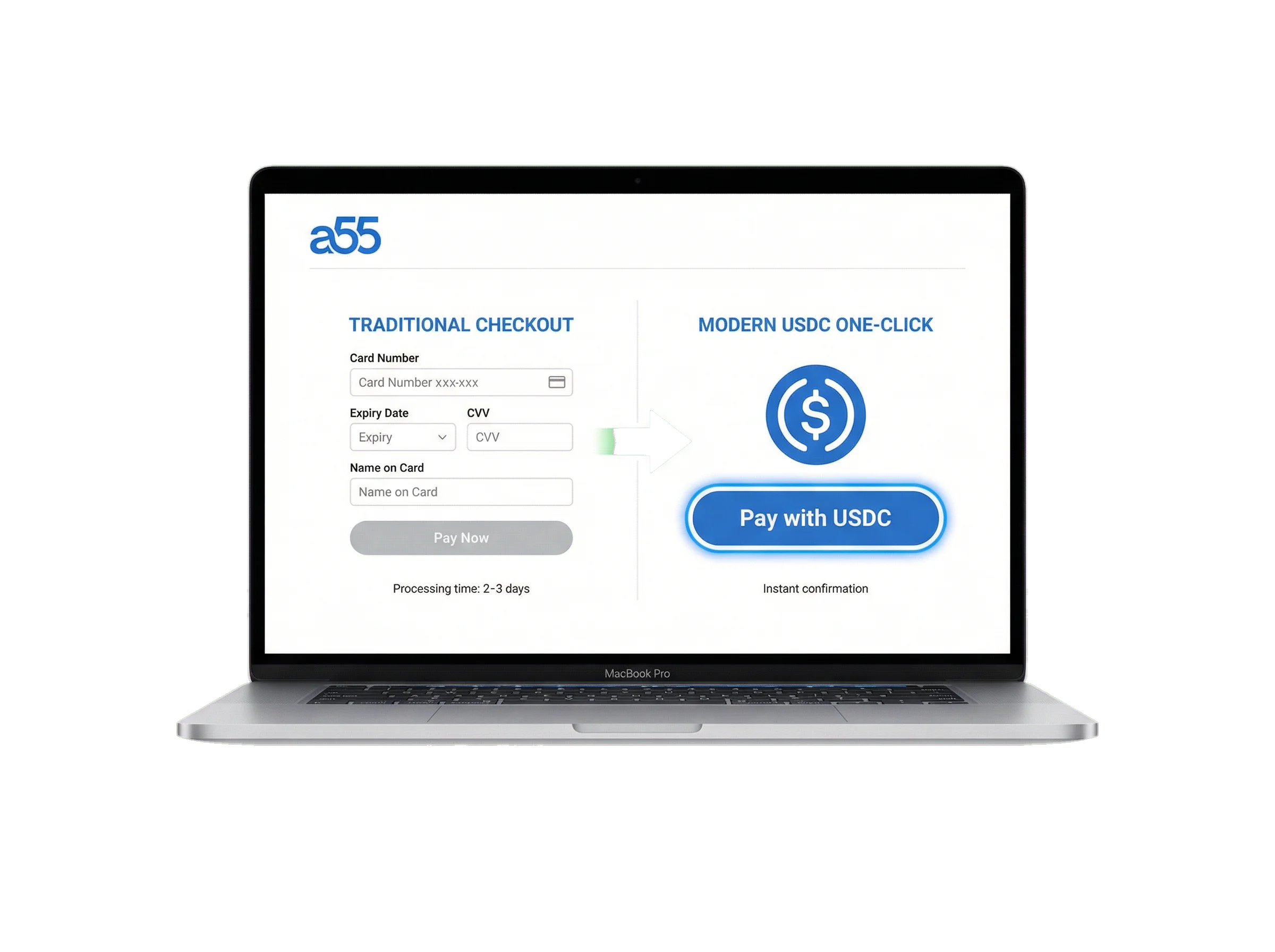
Traditional card networks were built for a different era of commerce. They introduce friction at every step: multi-day settlement times, chargeback disputes, and interchange fees that eat into thin margins. For merchants, these aren't just operational annoyances; they are structural costs that limit growth, especially in cross-border transactions.
One-click stablecoin checkout removes these barriers. By settling directly on-chain, merchants receive funds in seconds, not days. This immediacy improves cash flow and eliminates the need for reserve capital to cover pending transactions. The shift isn't just about speed; it's about reclaiming control over the payment lifecycle.
Fees tell the most compelling part of the story. Credit card processors typically charge between 1.5% and 3.5% per transaction, regardless of size. Stablecoin networks like Polygon or Solana charge a fraction of that—often less than one cent per transaction. This difference is not marginal; it is structural. For high-volume or low-margin businesses, the savings can be substantial, effectively increasing net revenue without raising prices.
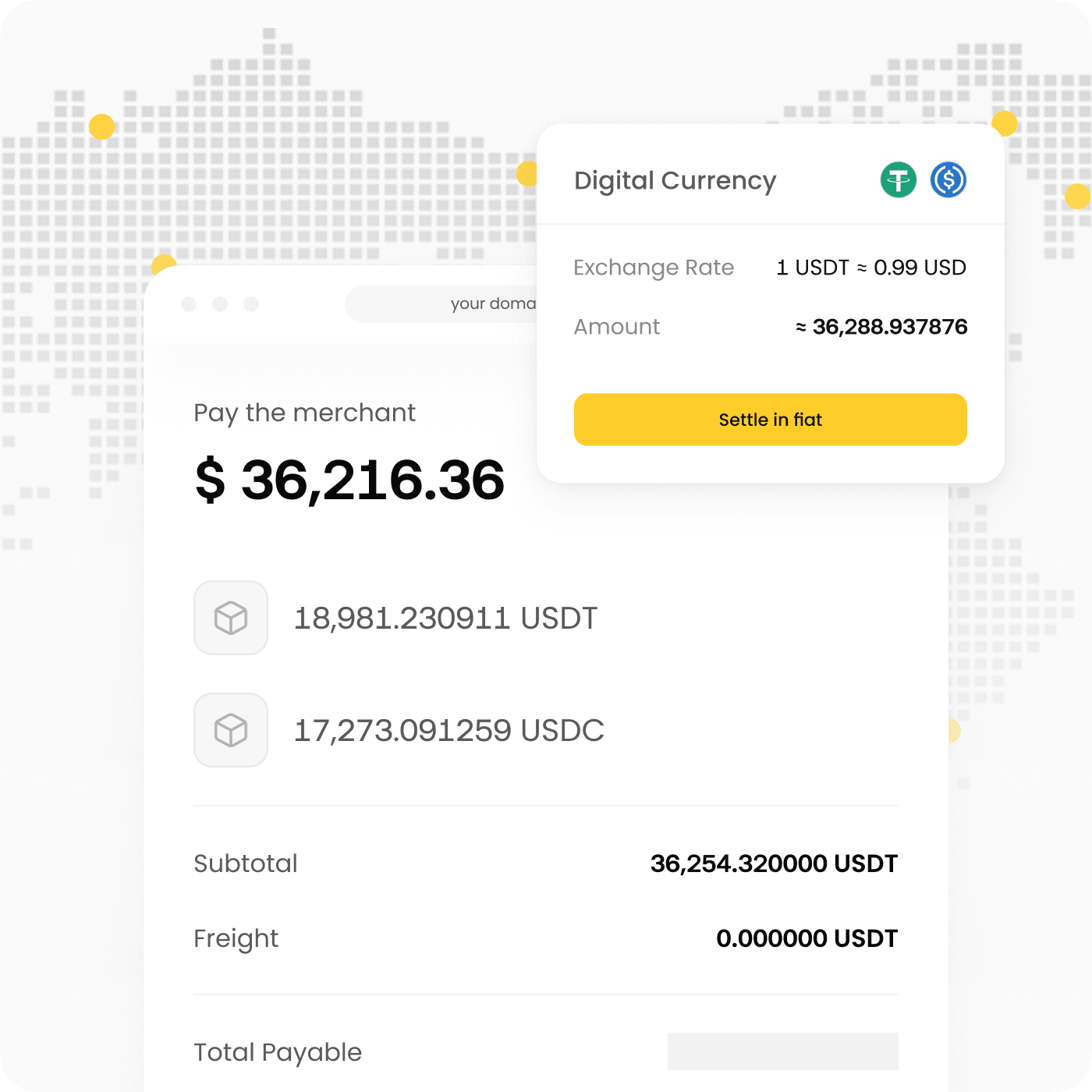
Global reach becomes instantaneous. A merchant in the US can accept payments from a customer in Brazil or Japan with the same ease as a domestic purchase. There are no currency conversion delays, no hidden FX fees, and no risk of international transaction declines. The customer pays in a stable asset, and the merchant receives it in a stable asset, bypassing the traditional banking correspondent network entirely.
The business case is straightforward: lower costs, faster settlement, and borderless accessibility. As stablecoin adoption grows, the infrastructure is becoming standardized, making integration simpler than ever. The question is no longer whether stablecoins work, but whether merchants can afford to ignore the efficiency gains they offer.
Top stablecoin checkout SDKs for 2026
Choosing the right SDK depends on whether you prioritize existing fiat infrastructure, developer flexibility, or transaction speed. The following providers represent the leading options for integrating one-click stablecoin payments into your checkout flow.
Checkout.com
Checkout.com offers a mature integration for enterprise merchants seeking to accept USDC without abandoning their current payment stack. By partnering with Coinbase and Fireblocks, the platform allows you to settle transactions directly in stablecoins or convert them to fiat instantly. This approach minimizes volatility risk while providing the familiar reconciliation workflows merchants already rely on. It is an ideal choice for established businesses that need robust compliance and fraud detection layers alongside crypto acceptance. Learn more about Checkout.com's stablecoin integration.
Eco
Eco focuses on removing friction for the end-user by enabling gasless transactions and global stablecoin balances. Their SDK allows you to issue deposit addresses to customers, who can then complete payments with a single click without managing private keys or gas fees. This abstraction is particularly effective for markets with high mobile penetration but limited crypto literacy. Eco handles the complex backend logic, allowing you to accept USDC, USDT, and other major stablecoins while maintaining a seamless user experience. Explore Eco's programmable money network.
Polygon
Polygon Checkout provides a high-speed, low-cost alternative for merchants prioritizing transaction velocity. By leveraging the Polygon network, payments settle in approximately five seconds with fees that often total less than a penny. This SDK is designed for high-volume, low-margin transactions where traditional credit card processing fees would erode profitability. It supports multiple stablecoins and offers a straightforward integration path for developers familiar with Web3 standards. Check Polygon's checkout documentation.
Blockradar
Blockradar takes a different approach by enabling stablecoin payments through shareable links rather than a traditional embedded checkout widget. This method requires no complex integration or customer account creation, making it suitable for B2B sales, freelancers, or one-off transactions. You generate a payment link, share it with the customer, and receive the stablecoin directly. While less automated for large-scale e-commerce, it offers the fastest path to acceptance for merchants who cannot dedicate engineering resources to SDK integration. Read Blockradar's checkout use cases.
| Provider | Settlement | Supported Chains | Integration Complexity |
|---|---|---|---|
| Checkout.com | Instant Fiat or USDC | Ethereum, BSC, Polygon, etc. | High (Enterprise SDK) |
| Eco | Real-time | Multi-chain (Gasless) | Medium |
| Polygon | ~5 seconds | Polygon (PoS) | Medium |
| Blockradar | Real-time | Multi-chain | Low (Link-based) |
How one-click stablecoin checkout works
One-click stablecoin checkout transforms the complex mechanics of blockchain transactions into a seamless merchant experience. Instead of managing private keys or manually signing every transaction, the integration relies on a software development kit (SDK) that abstracts the underlying protocol layer. This allows customers to pay with stablecoins like USDC or USDT using the same frictionless rhythm as entering a credit card number, while the backend handles the cryptographic verification.
The process begins when the customer selects stablecoin payment at checkout. Rather than navigating to a wallet app, the SDK triggers an in-page modal or browser extension prompt. The user approves the transaction with a single click or biometric scan. Under the hood, the system prepares the transaction payload, ensuring the correct smart contract interface is targeted for the specific stablecoin being used.
Gas fees and transaction signing are the traditional barriers to adoption. Modern checkout solutions use account abstraction or gasless sponsorship models. The merchant or a relayer pays the network gas fees, or the SDK batches transactions to minimize costs. This means the customer never needs to hold the native chain token (like ETH or MATIC) to make a payment, removing the need for complex onboarding steps.
Once signed, the transaction is broadcast to the blockchain. On high-throughput networks like Polygon or Solana, confirmation happens in seconds. The SDK monitors the mempool and updates the merchant’s dashboard in real-time. Unlike traditional credit card settlements that take 24-48 hours, stablecoin payments are final and irreversible immediately, reducing chargeback fraud and improving cash flow.
The stability of the asset is a critical component of this flow. Merchants prefer stablecoins specifically because they avoid the volatility associated with assets like Bitcoin. During peak transaction times, the peg remains tight, ensuring the value received matches the value quoted.
This technical architecture allows merchants to accept global payments without the overhead of foreign exchange fees or intermediary banking networks. By delegating the complexity to the SDK, businesses can focus on the customer experience rather than blockchain infrastructure.
Regulatory landscape for stablecoin payments
Merchants can no longer treat stablecoin acceptance as a grey-area experiment. The regulatory environment has shifted from vague warnings to specific frameworks that define legal certainty, reserve requirements, and consumer protections. For integration teams, understanding these diverging paths is essential to mitigating compliance risk and ensuring long-term viability.
The United States: The GENIUS Act and Federal Oversight
The proposed GENIUS Act represents the most significant potential federal framework for payment stablecoins in the US. It mandates that stablecoin issuers maintain 1:1 reserves in high-quality liquid assets, such as cash or short-term Treasuries, and undergo regular audits. For merchants, this federal-level clarity would reduce the patchwork of state-level money transmitter licenses (MTLs) currently required to accept crypto payments. While the bill is still in legislative consideration, its provisions signal a move toward treating stablecoins more like traditional payment rails than speculative assets.
Europe: MiCA as the Gold Standard
The Markets in Crypto-Assets (MiCA) regulation, fully implemented in the EU, provides one of the most comprehensive regulatory structures globally. MiCA imposes strict capital and reserve requirements on stablecoin issuers, banning algorithmic stablecoins and requiring transparent reporting. Merchants operating in or serving EU customers must ensure their payment processors are MiCA-compliant. This framework offers a high degree of predictability, allowing businesses to integrate stablecoin checkout with confidence that the underlying assets are backed and regulated.
United Kingdom: Bank of England’s Approach
The Bank of England and HM Treasury are pursuing a distinct path, focusing on bringing stablecoin usage within existing financial infrastructure rather than creating entirely new categories. Their strategy emphasizes linking stablecoin payments to existing payment systems like Faster Payments, ensuring that stablecoins do not bypass anti-money laundering (AML) controls. For merchants, this means integration partners must demonstrate robust AML/KYC capabilities to operate within the UK’s evolving regulatory sandbox.
What This Means for Merchants
The fragmentation of global regulation complicates global expansion. A merchant accepting USDC in the US, EURC in Europe, and GBP-backed stablecoins in the UK must navigate three different legal standards. The key is to partner with payment gateways that handle the regulatory heavy lifting. These providers often hold the necessary licenses or operate under the licenses of their banking partners, shielding the merchant from direct regulatory exposure. As frameworks solidify, the cost of compliance will decrease, but the bar for transparency will rise.
Steps to integrate a stablecoin checkout SDK
Integrating a stablecoin checkout SDK moves your merchant account from accepting fiat to processing USDC or other pegged assets directly on-chain. This guide outlines the concrete steps to go from selection to live deployment, ensuring your payments infrastructure is both compliant and efficient.
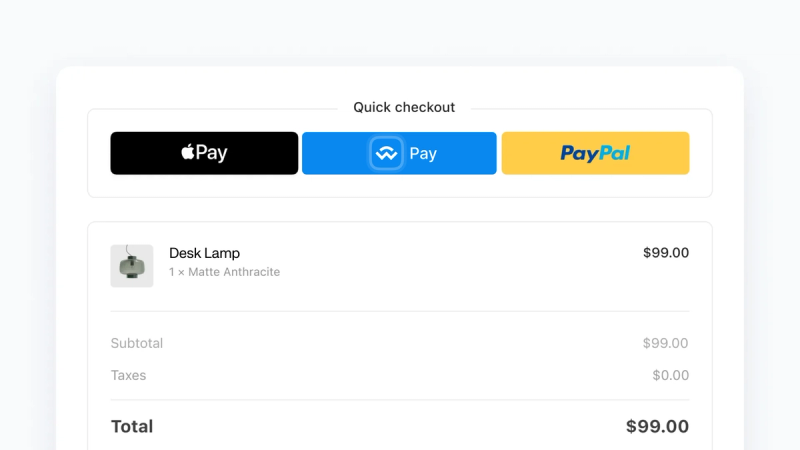
Choose an SDK that settles in stablecoins like USDC. Providers such as Checkout.com or Blockradar offer APIs that handle the complexity of blockchain transactions, allowing you to accept crypto without holding volatile assets. Verify that the provider supports your target jurisdictions and offers direct fiat settlement options if needed.
Generate your API keys from the provider’s developer dashboard. You will need to configure your merchant wallet addresses for receiving funds. Ensure you have separate testnet and mainnet credentials to isolate development traffic from live transactions. This separation is critical for debugging without risking real capital.
Before going live, run your integration against the provider’s testnet. Simulate a full checkout flow: initiate a payment, verify the on-chain confirmation, and trigger a webhook to confirm your backend received the success signal. This step catches integration errors early and ensures your webhook handlers are robust.
Most stablecoin providers require merchants to complete Know Your Customer (KYC) and Anti-Money Laundering (AML) verification. Upload your business documentation and wait for approval. This process can take several days, so start it early. Failure to complete this step will result in frozen funds or rejected transactions once you go live.
Switch your API keys to production mode and deploy your code. Monitor the first few transactions closely to ensure webhooks are firing correctly and funds are settling as expected. Use provider-backed widgets to track USDC/USD trends alongside your transaction volume to identify any correlation between market volatility and payment success rates.
No comments yet. Be the first to share your thoughts!